Heineken is a company that has drawn my attention lately due to its excellent execution of an expansion strategy, while protecting the base business. This is possible behind the new campaign and continuous engagement with the consumers via digital.
The initial steps were made with the launch of the new campaign "Open your world" at the end of 2010.
The campaign objectives as I understand it are:
1) Reposition Heineken beer from a commodity drink that targets men fans of football into a fashionable drink for responsible drinkers (both men and women)
2) Expand into new channels: night clubs and new consumer segments: women
3) Convert drinkers of spirits and cocktails to beer
4) Reposition Heineken brand from a distant brand to an approachable, close to consumers brand
The campaign was launched via TV, with a pre-seeding on youtube and facebook. While the first channel ensures high reach, the latter channels drive 1:1 conversation with consumers and thus brings the brand closer to its consumers.
Teaser video on youtube before actual campaign launch:
Each of the TV copies and initiatives is executed as launch and leverage and addresses one of the objectives stated above:
- first TV "the Entrance" - with the objective to reposition Heineken beer as a drink for fashionable/trendy consumers
- social responsibility campaign that addresses objective 2 and 3 above
The social responsibility initiative was coupled with engagement of consumers into developing night club concepts.
- TVC "the date" aimed to help positioning Heineken as a drink for trendy people.
The TVC has been extraordinarily leveraged also digitally via "behind the scenes" video distributed via youtube and facebook.
- commercial initiative to leverage a TV copy "The Date" further by leveraging seasonal events (Valentine's day in this case).
This is also a best in class example of bringing to life a social media strategy via always on conversation calendar. This time, the initiative is called "Serenade" and it is a leverage of the TVC "the date".
- TV copy "the date" (see above)
the Serenade social engagement was executed in phases:
1) create buzz:
2) launch invitation:
3) Italian amplification:
4) closing:
5) wrap up package to continue engagement:
- commercial initiative to develop a limited edition bottle by leveraging open innovation and engaging with consumers. Main phases:
- launch - invitation to consumers to start designing the heineken bottle via facebook.
- phase 2- sharing the progress on the design competition
- phase 3 - selection of the finalists
At the same time, Heineken is protecting its base business (targets football fans) via sponsorship of UEFA Champions League.
Also here, digital is leveraged via 1:1 conversation.
More to come on the impact of the campaign on sales and equity.
Showing posts with label Reflections. Show all posts
Showing posts with label Reflections. Show all posts
Wednesday, March 21, 2012

Sunday, June 20, 2010
Clock free weekend

Swatch always on hand, even when showering...
Daily alarm iPhone application....
Sleep Cycle iPhone app....
Computer clock...
Outlook calendar...
To do's computer application...
In a world where we are rolling out our daily lives against the clock, how would it be to spend a weekend without the eye on the clock?
What started as a rather unconscious move of taking off my clock for an unrelated reason and leaving my phone in another room, soon turned into a purposeful action not to use any time measuring objects/apps for the whole weekend.

So, what's good in this?
- It gives you the feeling of infinite time to be with yourself and do everything that you spontaneously wish to do.
Although this might seem like a not the most efficient use of your time, you will soon realize that you have more time than when you go by the clock. Why? When you plan let's say... 2h for yourself, you will spend the first 10 min thinking of how to use this limited time and the last 10 min with the eyes on the clock for the next appointment. As such, you don't really relax.
- You discover new ways to enjoy yourself that you haven't tried before because you were thinking that it is not worth investing your precious time in.
For example, when it's pouring raining outside and you had outdoor plans, you start becoming anxious when thinking about the wasted weekend. However, it doesn't need to be wasted! Try and cook some dish that you always wanted to cook, but never started doing because you thought it would take too long to do.
Or, re-arrange your wardrobe and you might discover clothes that you didn't wear for a long time because you were always taking on the first clothes from the top of the pile. This can be a 2 in 1 activity:
1) You select what you really need, and what you can give away and thus free up some space in your closet.
2) During this time you free your mind to wander around, review, process and learn from what has happened in the previous week.
- You may even end up doing more things than when going by the clock. Why?
Let's suppose that you plan your weekend well in advance and that you end up with a to do list for the weekend. However, when the weekend comes, you are not in the mood to start doing the planned things. Consequently, you choose one of the activities that you ought to do and then you take numerous breaks, because it's weekend and you know that you should take it easy. Sunday evening you realize that you have done 10% from what you have planned and you get frustrated.
However, if you don't go by the clock, you realize that after some time spent doing everything that you were in the mood for, you are get caught in the frenzy and start doing productive things. This urge to do becomes stronger when you are pleasantly surprised to see that you still have more time than expected. And you get on track and become more efficient in doing those things than in the case when you planned to do specific things.
All in all, leaving the technology away and going by your gut feeling can be a good thing to experiment every now and then. It gives you a liberating feeling that is comparable to a whole vacation week at the seaside or in the mountains.
Disclaimer:
I am not suggesting to have every weekend a clock free weekend. However, I find it beneficial from time to time.
Saturday, June 5, 2010
The brand Switzerland
This post is for all those interested in country branding and to the ones who want to see nice videos about Romania...but mostly for the former reason :-)
Why write about this now?
1) The topic has been a hype in the last 3 years in Romania.2 totally different country images were developed for Ro.Although one of them had many good things inside, they've lacked a holistic communication, that one idea to leverage at different touchpoints: through TVC, Print, Internet banners,national tourism website,prints in each townhall, mobile phone apps, etc. Consequently,nothing was built around it and it faded away.
2) A few weeks back I've been to the Museum of Design in Zurich to visit "Paradise Switzerland" - the exhibition. It has been mind opening to see what and how long it took to create the Schwiitz brand. In this case, it took 50 years for the brand Switzerland to stand for:quality, mountains, and precision.

It all started in the 1920s, when the Swiss government advisertised Switzerland to Swiss as a winter holiday destination. The communication idea was: healthy kids thanks to fresh air and sports in the nature.
In parallel, Switzerland has promoted its agriculture: fresh mountain milk and cheese.
So, how did Swiss build their brand?
-Find 3 things that define your country,are different from the ones of neighboring countries and are deeply rooted in the
territory. In the Swiss case: spectacular mountain scenery, quality products, precision (clock industry).
-Think of a campaign idea that is general enough to include the 3 characteristcs to promote.The campaign idea needs to be easy understood so that it can be leveraged at multiple touchpoints. In the Swiss case: keep yourself fit and enjoy the quality Switzerland has to offer.
-Think of a logo and a slogan that reunites these 3 elements.This will be the common element in all advertising media. For CH, the flag was chosen as a logo. As for the slogan: Swiss Quality.
-Develop the Tvc to leverage one element at a time.If you can logically connect 2 elements, you can then include boh in
one Tvc.Do Not try to fit all the 3 elements in one Tvc b/c it will dillute your message.Use alternatively different
Tvc,having as a common element the slogan and the logo.
-Repeat,repeat,repeat the same ideas over and over again.The executions can be different,but the idea Must be the same.
And now, to the Switzerland example:
- for mountains they chose Matternhorn and they repeated the same image, though in a modern look,for 70 years;
- quality - the executions were always different,but same idea;
- clocks - he idea of precision was communicated.In some instances, quality and clocks were
connected in the same commercial by "precision".
-to this, they added a fourth element: chocolate.This was alternatively connected to mountains and the fresh milk of mountain cows or to quality.
So, what can be done in Romania's case?
1) elements:
- wild, virgin nature and the Danube Delta as an image for this;
- authentic villages - which is easily connected to nature;
- hospitality - fits with villages.
2) Slogan/logo - the use of the flag is not recommended b/c it is too disturbing in a print;
3) Tvc - below are 2 attempts to portray Ro. I prefer the former b/c it is captures some of the typical ro elem.
1st video- was done by Ogilvy 4-5 years ago. The campaign idea is: Romania - simply surprising. It is my favorite one due to the combination of music and image choice.
2nd video - the positive in there is the placement of known personalities, sport people like: Hagi, Nadia Comaneci, or Ilie Nastase. However, the slogan was less inspired, as well as the image selection, which doesn't really capture the most special things/places in Romania. To end with, this video tries to cover too many distinct aspects of Romania and it thus dillutes the message. At the end you cannot really tell what Romania is. This probably proofs that the creatives behind this video weren't briefed correctly and didn't really immerse in the topic. However, enjoy it! There are 2 versions for this video.
The first one is a teaser. It's funny and it serves its purpose.
The second version is the real TVC:
and finally...a teaser sponsored by SAB Miller to refresh/ learn more about Romania:
Why write about this now?
1) The topic has been a hype in the last 3 years in Romania.2 totally different country images were developed for Ro.Although one of them had many good things inside, they've lacked a holistic communication, that one idea to leverage at different touchpoints: through TVC, Print, Internet banners,national tourism website,prints in each townhall, mobile phone apps, etc. Consequently,nothing was built around it and it faded away.
2) A few weeks back I've been to the Museum of Design in Zurich to visit "Paradise Switzerland" - the exhibition. It has been mind opening to see what and how long it took to create the Schwiitz brand. In this case, it took 50 years for the brand Switzerland to stand for:quality, mountains, and precision.

It all started in the 1920s, when the Swiss government advisertised Switzerland to Swiss as a winter holiday destination. The communication idea was: healthy kids thanks to fresh air and sports in the nature.
In parallel, Switzerland has promoted its agriculture: fresh mountain milk and cheese.
So, how did Swiss build their brand?
-Find 3 things that define your country,are different from the ones of neighboring countries and are deeply rooted in the
territory. In the Swiss case: spectacular mountain scenery, quality products, precision (clock industry).
-Think of a campaign idea that is general enough to include the 3 characteristcs to promote.The campaign idea needs to be easy understood so that it can be leveraged at multiple touchpoints. In the Swiss case: keep yourself fit and enjoy the quality Switzerland has to offer.
-Think of a logo and a slogan that reunites these 3 elements.This will be the common element in all advertising media. For CH, the flag was chosen as a logo. As for the slogan: Swiss Quality.
-Develop the Tvc to leverage one element at a time.If you can logically connect 2 elements, you can then include boh in
one Tvc.Do Not try to fit all the 3 elements in one Tvc b/c it will dillute your message.Use alternatively different
Tvc,having as a common element the slogan and the logo.
-Repeat,repeat,repeat the same ideas over and over again.The executions can be different,but the idea Must be the same.
And now, to the Switzerland example:
- for mountains they chose Matternhorn and they repeated the same image, though in a modern look,for 70 years;
- quality - the executions were always different,but same idea;
- clocks - he idea of precision was communicated.In some instances, quality and clocks were
connected in the same commercial by "precision".
-to this, they added a fourth element: chocolate.This was alternatively connected to mountains and the fresh milk of mountain cows or to quality.
So, what can be done in Romania's case?
1) elements:
- wild, virgin nature and the Danube Delta as an image for this;
- authentic villages - which is easily connected to nature;
- hospitality - fits with villages.
2) Slogan/logo - the use of the flag is not recommended b/c it is too disturbing in a print;
3) Tvc - below are 2 attempts to portray Ro. I prefer the former b/c it is captures some of the typical ro elem.
1st video- was done by Ogilvy 4-5 years ago. The campaign idea is: Romania - simply surprising. It is my favorite one due to the combination of music and image choice.
2nd video - the positive in there is the placement of known personalities, sport people like: Hagi, Nadia Comaneci, or Ilie Nastase. However, the slogan was less inspired, as well as the image selection, which doesn't really capture the most special things/places in Romania. To end with, this video tries to cover too many distinct aspects of Romania and it thus dillutes the message. At the end you cannot really tell what Romania is. This probably proofs that the creatives behind this video weren't briefed correctly and didn't really immerse in the topic. However, enjoy it! There are 2 versions for this video.
The first one is a teaser. It's funny and it serves its purpose.
The second version is the real TVC:
and finally...a teaser sponsored by SAB Miller to refresh/ learn more about Romania:
Monday, August 24, 2009
Re-thinking what success really means

For some months now, hundreds of articles have been published on the topic of graduate studies' value. Titles such as "MBA studies don't pay off nowadays" or "25 percent of Ivy league MBA 09 graduates are still jobless" add to the mental pressure that MBA graduates looking for jobs face. This made me realize that we're living in a society which makes us believe that we are totally responsible for our career success.
Our society ruthless splits people into two categories: winners and losers. "Winners" are considered the richest, most renowned in their industry, working for the industry leader companies, while "losers" are the one who don't have one of these qualities. Added to this, business schools preach that the best for one's career is to go either into management consulting, and there only to McKinsey, BCG, Bain or Booz or into banking to Goldman Sachs & its peers. Should you think about another career, you're bound to be included in the "losers" category.
After quite a long time of being brainwashed to think this way, I've come across an inspiring talk given by Alain de Botton on the topic of success. His speech supported my previous attempts of going against this conventional flow and pursuing a personal career track. As I know that many of you are dealing with the same struggles, I wish to share the main take-outs from Alain de Botton's speech:
- Success is an individual definition. In other words, when setting a career goal make sure that it is your OWN wish, and not merely a conventional expectation that society has from you. Otherwise, as you approach to your goal and give up other things for that, you start wondering whether it is something that you really wanted, and you risk being miserable though you reach your goal.
- Society makes you believe that you can be anything and anywhere. The truth is that we cannot control our lives and success to 100%. Hazards and luck play a role in our reaching our career goals.
- You cannot be good at everything. In other words, don't expect to be the best management consultant in the FMCG industry in your country and be the best dad in your country, at the same time. In order to be the best at something, you need to give up something else. Make sure that you are well aware of your choices.
All in all, I suggest you give a thought to your goals and make sure that they are really yours and that you are well aware of what it takes to achieve them.
For the ones who feel that it's worth dedicating 17 minutes of their time to hear the entire argument, please find below the Alain de Botton's talk on TED:
Thursday, June 4, 2009
Quarterlife crisis

What I thought to be a personal crisis is apparently a more wide spread phenomenon with people of my age. Until now, I've only heard about the midlife crisis, but never of a quarterlife crisis. This seems to be a quite new phenomenon in line with the increased mobility and increased career opportunities that high potential graduate students have.
The quarterlife crisis is characterized by "unrelenting indecision, isolation, confusion and anxiety about working, relationships and direction", which affects "people in their mid-twenties to early thirties who are usually urban, middle class and well-educated".
What's the explanation?
Briefly said:
"They can’t make any decisions, because they don’t know what they want, and they don’t know what they want because they don’t know who they are, and they don’t know who they are because they’re allowed to be anyone they want."
To this I could add that, when they know what they want, they are not sure that it is the right way and they are highly risk averse regarding their career. Thus, they are proofing their decision by trying out other areas of business with the result that they don't like it that much and so they become more certain that the initial plan is the right one to pursue. Nevertheless this is quite a costly way to test whether a decision is right or wrong.
What to do about it?
Some thoughts:
1) The first job is usually not the ultimate job. Job changes are possible and normal during a career development.
2) The sooner you take the chance, the better. As a young adult, you don't have too many responsibilities towards a family (spouse / children), household, bank credits, so you can afford to take the chance and do what you are in the mood for. It may be the only chance to do this in your life.
3) Follow your gut feeling. After you have analytically and structurally evaluated some opportunities and still don't know what to do, just let the information process unconsciously in your brain and follow your gut feeling. What is known as gut feeling is in fact the result of the unconscious work that our brains are doing while we are sleeping or relaxing.
I welcome any other suggestions!
May you have a smooth Quarterlife Crisis!
Source for some info: Carraway, K. (2009). Welcome to your quarterlife crisis, Eyeweekly.com
Sunday, March 1, 2009
Celebrating spring...among others
Today I celebrate two important events:
The first one is the beginning of spring, which is celebrated in my country, Romania, with flowers and certain pin-ons which are given as a gift from men to women, from children to moms and to the teachers, as well as among pupils. It's meaning is briefly explained below:
The second celebration is that today is one year since I started writing on this blog. Be it in times of economic growth, crisis and depression, I tried to capture and present what I passionately care about besides my daily professional life. Apart from being a "catching up" platforms with my friends from all over the world, it is meant to reflect the changes in my interests, a certain "how I was vs. now" kind of thing. As such, even if this blog is not as interactive as was initially aimed to be, I still find it very valuable as a storyboard of my globetrotting. I thank to my friends who take the time to read my pages from every now and then and I am happy that we can stay in touch through this, although I would prefer to meet you all in person again.
Enjoy reading and have a great spring!
The first one is the beginning of spring, which is celebrated in my country, Romania, with flowers and certain pin-ons which are given as a gift from men to women, from children to moms and to the teachers, as well as among pupils. It's meaning is briefly explained below:
The second celebration is that today is one year since I started writing on this blog. Be it in times of economic growth, crisis and depression, I tried to capture and present what I passionately care about besides my daily professional life. Apart from being a "catching up" platforms with my friends from all over the world, it is meant to reflect the changes in my interests, a certain "how I was vs. now" kind of thing. As such, even if this blog is not as interactive as was initially aimed to be, I still find it very valuable as a storyboard of my globetrotting. I thank to my friends who take the time to read my pages from every now and then and I am happy that we can stay in touch through this, although I would prefer to meet you all in person again.
Enjoy reading and have a great spring!
Thursday, February 5, 2009
First impression about Frankfurt
After four days of living in Hessen, in one of the so called „selected areas“ of Frankfurt, Bad Homburg, I’ve adventured myself into discovering the non-touristic areas of the innercity.
Only pure luck could have brought me to an area which I really like called Sachsenhausen. It begins at the Museum quai and continues to the south along the Swiss Street (Schweizer Strasse).
Not too green, not too crowded, not too perfect, this region has been love at first sight. I love how the houses form a continuous, uniform, front to the street, the warm colours used for painting the houses, the small caffee shops, diverse restaurants and people who walk on the street. Posh bistros and upper scale bio-stores are intertwined with restaurants whose names speak for the kind of food served:Taj Mahal, Eis Cafe Milano, NYC bar & restaurant, trattorias, etc. Above this reigns the metalic sound of the tramway, which runs in a ten minute tempo.
But enough with the sentimentalism and let’s get down to business. I wonder how much it costs to live here. If you look at the people walking on the street, they are a mix of multicultural residents, some much better dressed than others. From this, one could conclude that the prices shouldn’t be up in the sky. However, the proximity to the bank quartier which is right on the other side of the Main river, speaks against this.
Though Richard Florida’s criteria, this would be an area for the creative class, which is on the verge of being gentrified due to its short distance to the bank quartier.
So, being at the coffee shop Fellini at the Swiss Place (Schweizer Platz), I add to my today’s „to do list“ a research about the rent prices in the area.
Finally, I leave you with a collage of pictures freshly taken from „THE PLACE“.


Thursday, January 22, 2009
Heading to...?
Dear all,
There are critical moments in life when one asks oneself:
What to do with my life?
Numerous books and articles have been written on this topic. What they suggest is:
- The assumption that you can follow your dreams after having raised enough money is false, as one freeze dreams because they die in time. Fulfilling one's dreams is liberating and makes one happier even having less cash. Postponing to fulfill one's dream is wrong as time flies and without something personal negatively impacting one's life, the dream will be abandoned.
- Using logical reasoning to solve this problem usually only leads to answers that make the brain happy and jobs that provide "brain candy." Intense mental stimulation. Thus, the right question to ask is not "what am I good at?", but "what would stimulate me for a year or something that I can be passionate about for 10 year?"
- Thirdly, the right question to ask when searching for a job is not "what will I do?", but "who will I become?" This is because once rooted in a particular system, it's often agonizingly difficult to unravel oneself from its values, practices, and rewards. In other words, one needs to find a job that complies with one's values and principles.
- Lastly, it's very important to ask oneself the question "what to do with my life?" and think about it seriously. Let yourself time to consider several options and check whether they are in line with your inner self. One needs to be aware that the more options one has, the more difficult it is to answer the Question.
In line with a previous post on whether to return to Romania after finishing your studies, here is a survey made by the Association of Romanian Students and Scholars at Princeton University. These findings call for the need to bring together high potential young individuals, to create a platform for them to network and develop future businesses in Romania.
Here is the presentation.
There are critical moments in life when one asks oneself:
What to do with my life?
Numerous books and articles have been written on this topic. What they suggest is:
- The assumption that you can follow your dreams after having raised enough money is false, as one freeze dreams because they die in time. Fulfilling one's dreams is liberating and makes one happier even having less cash. Postponing to fulfill one's dream is wrong as time flies and without something personal negatively impacting one's life, the dream will be abandoned.
- Using logical reasoning to solve this problem usually only leads to answers that make the brain happy and jobs that provide "brain candy." Intense mental stimulation. Thus, the right question to ask is not "what am I good at?", but "what would stimulate me for a year or something that I can be passionate about for 10 year?"
- Thirdly, the right question to ask when searching for a job is not "what will I do?", but "who will I become?" This is because once rooted in a particular system, it's often agonizingly difficult to unravel oneself from its values, practices, and rewards. In other words, one needs to find a job that complies with one's values and principles.
- Lastly, it's very important to ask oneself the question "what to do with my life?" and think about it seriously. Let yourself time to consider several options and check whether they are in line with your inner self. One needs to be aware that the more options one has, the more difficult it is to answer the Question.
In line with a previous post on whether to return to Romania after finishing your studies, here is a survey made by the Association of Romanian Students and Scholars at Princeton University. These findings call for the need to bring together high potential young individuals, to create a platform for them to network and develop future businesses in Romania.
Here is the presentation.
Survey Romanian Student and Scholar Association at Princeton
View more presentations or upload your own.
Monday, December 29, 2008
Reghin through new glasses
Having spent this winter vacation in Reghin after living for a long time in another place, I've been able to see my hometown through different glasses than that of a resident. What I saw really impressed me and it made me wonder why I didn't notice these things before. The conclusion is that it isn't such a bad town to live in as I thought before.
Why?
Let's analyze it according to the already established criteria for evaluating a town.
- Transportation - within an hour drive to an international airport which connects you via Budapest (the capital of Hungary and not of Romania) to the entire Europe
- Free time activities - more than I imagined. Cultural activities: theater and cinemas within one hour drive; opera within one and half hour drive. Spas and wellness centers - within thirty minutes drive. Outdoor activities - mostly hiking, skiing - within one hour drive.
- Clubs and bars - this is still a minus for the town, as there is a very limited offer.
- Safety - as most small towns, it is very safe, also during the night.
- Education opportunities - elementary school in three languages: Romanian, German, Hungarian existent in town. High schools with the most common specialization - in town and within an hour drive. University - a limited choice within an hour drive and a very good university center within one hour and a half drive.
- Utilities - such as hairdresser, solarium - wide offer in town. Fast moving consumer goods shops - in town and bigger shopping centers within an hour drive.
However, what is missing are the people with the same education level and life aspirations.
So, what I wonder is: how does a town develop - it is the "right" creative people who should come first or the "right" amenities to attract them?
Apparently for Reghin, one of the problems seems to be how to market the town so that people get an accurate image of what it nowadays offers and shadow the old impressions of an isolated place.


Why?
Let's analyze it according to the already established criteria for evaluating a town.
- Transportation - within an hour drive to an international airport which connects you via Budapest (the capital of Hungary and not of Romania) to the entire Europe
- Free time activities - more than I imagined. Cultural activities: theater and cinemas within one hour drive; opera within one and half hour drive. Spas and wellness centers - within thirty minutes drive. Outdoor activities - mostly hiking, skiing - within one hour drive.
- Clubs and bars - this is still a minus for the town, as there is a very limited offer.
- Safety - as most small towns, it is very safe, also during the night.
- Education opportunities - elementary school in three languages: Romanian, German, Hungarian existent in town. High schools with the most common specialization - in town and within an hour drive. University - a limited choice within an hour drive and a very good university center within one hour and a half drive.
- Utilities - such as hairdresser, solarium - wide offer in town. Fast moving consumer goods shops - in town and bigger shopping centers within an hour drive.
However, what is missing are the people with the same education level and life aspirations.
So, what I wonder is: how does a town develop - it is the "right" creative people who should come first or the "right" amenities to attract them?
Apparently for Reghin, one of the problems seems to be how to market the town so that people get an accurate image of what it nowadays offers and shadow the old impressions of an isolated place.
Monday, December 22, 2008
Christmas modernity

Father: So, here's the Christmas tree. It is pretty uniform...
Daughter: Please bring it in after you refine its height.
Father: But what about the artificial tree that I bought last year? It's in the garage. It looks like a real one and it doesn't even leave any leafs.
Daughter: ....I see...and what about the typical Christmas tree smell?...
Father: But you see, because of the temperature, the real one will soon dry and its leafs will start falling.
Daughter:..I understand...ok, bring the one from the garage. I'll try to make it look real. However, what do we do then with the real one?
Dana (a co-worker) is just arriving.
Father: Dana, do you already have a Christmas tree?
Dana: No, I don't.
Father: Would you like to have this tree? Look how nice it is. It will be perfect for your apartment.
Dana: Thank you, sir. Do you mind if I come to pick up the tree only tomorrow?
This snapshot shows how modernity is seen in Romania. Artificial trees replace the strong scent of the Christmas tree, the smell of home made cookies are replaced by the series produced cookies bought in the hypermarket.
Why did the old traditional values go?
The generations that are now between 40-50 years old have been raised during the communism, when traditions and values were suppressed, religion was banned and larger group gatherings interdicted.
Now, when they start affording the goods they didn't find or could buy before, they are rushing to internalize them in their homes.
Question: Why did you buy that curtain? I once asked my mom. It doesn't really fit to the style of our house.
Answer: The lady from the shop told me that these curtains are the trendiest of all.
Examples such as the ones above show how Romanian middle class people from mid and small size towns think. Even though one might argue that it is not representative for the entire land, it is the kind of thinking that I often deal with when talking to 40-50 year old.
That's why I miss the Christmas feeling, the Christmas cooking activities and the Christmas cookies smell, the wine, the carols...and I actively try to influence people to revive it.
Saturday, December 20, 2008
It's the most wonderful time of the year...

...with the kids jingle belling and everyone telling you "Be of good cheer"...
...with the fuel price dropping and everyone shopping...
But why is this the most wonderful time of the year? Depending on whom one asks this question, the reasons might be:
- we have a new government which promises us to finally build the first highway to connect us to Hungary
- US carmakers can already celebrate Christmas with the $17.4 bio. emergency loans received from the government
- oil price is at 25% of its value 6 months ago
- Fed decreased interest rate to 0% in an attempt to boost the economy from recession
Even though outlooks look grim, we push the "PAUSE" button for the next two weeks and enjoy Christmas season.
- we have a new government which promises us to finally build the first highway to connect us to Hungary
- US carmakers can already celebrate Christmas with the $17.4 bio. emergency loans received from the government
- oil price is at 25% of its value 6 months ago
- Fed decreased interest rate to 0% in an attempt to boost the economy from recession
Even though outlooks look grim, we push the "PAUSE" button for the next two weeks and enjoy Christmas season.
But what is left of the original Christmas spirit and what do we actually celebrate nowadays?
If we look around, we notice that the Christmas spirit has been downgraded to selfish and materialistic concerns about: where do we go on holiday? how much meat, pastry and drinks should we buy? are there enough presents under the tree?That is, we have lost any connection with what we are really celebrating.We know who's responsible for this, but is it really that bad?
If we look around, we notice that the Christmas spirit has been downgraded to selfish and materialistic concerns about: where do we go on holiday? how much meat, pastry and drinks should we buy? are there enough presents under the tree?That is, we have lost any connection with what we are really celebrating.We know who's responsible for this, but is it really that bad?
Let's try to look at this through different glasses and appreciate the fact that the winter holiday season allows us to spend more time with our family, to disconnect our brains from the daily activities and just enjoy the free time. However, what is even more problematic is that we allow ourselves free time only so rarely and that we spend most of lives challenging ourselves. The desire for self improvement is indeed positive, but let's not forget that we should allow our minds and bodies a rest more frequently than 2 times a year.
With this, I wish you a happy Christmas and take care.
Sunday, November 9, 2008
BRIC - A shortcut to remember

Newspapers are full with information regarding automotive companies who open or will in the near future open a production capacity in Russia.
Ford, Toyota...they already set ground in Russia. Now, it's GM's turn to begin producing their cars in Russia. Fiat, Hyundai, Nissan and Suzuki announce to follow the trend.
The paradox is that even though automotive companies struggle now with decreasing turnovers and profits, they still invest in factories in Russia. How come?
Markets in developed countries are already very saturated and market shares are rather stable.
BRIC countries (Brasil, Russia, India, China) are the among the developing economies that play an increasing role in the world's economy.
Especially in times of crisis, when developed countries are in recession, these countries continue their ascending trend.
Russia and China are countries with huge market potential as the economic growth leads to an increasing proportion of the middle class who affords to buy cars and new technology products.
So why Russia and not China?
Although the regulations on foreign companies access in China have become less stringent, automotive companies still need a lot of authorizations and licenses and undergo shareholding restrictions (49%) if they want to open up a production capacity in the mainland.
In contrast, Russia's laws are a bit more lax in this regard and allow wholly owned foreign businesses. Still, companies have to fight the red tape and long processing times or need to develop good ties with the local officials in order speed up processes.
Despite this, foreign companies take the risk because Russia will be one of the "promised lands" for the automotive business in the next years.
But why open up a production factory and not use imports?
The most important reasons behind their thinking are:
- lower labor costs
- access to cheap resources (all kinds of metals)
- speed of distribution
- avoid taxes on imports
To sum up, while automotive companies standstill or even shut down some production capacities in developed countries, they open up new production facilities in Russia, as well as in other BRIC countries. The latter will be their main distribution markets in the future and everybody wants to gain a foothold in their markets to be able to capture a share of the huge market potential.
Mobile phones - lifestyle or necessity?

"Romanians change mobile phones as they change socks"
If we compare this with the Americans' buying behavior, they change their mobile phones every 3 years.
Irrational behavior I would say if we think that the average monthly income is EUR 470. However, as for everything, there IS AN EXPLANATION.
For Romanians, mobile phones are fashion and lifestyle objects. Mobile phones are used as artifacts of a certain life quality or social status that people aim to have. So it happens that even though some don't afford it, Romanians feel the need to own the latest technology, the most fashionable mobile phone and to show off with it.
Post-communist Romania is a materialistic society. In this Romania, material objects such as a German car brand, a Nokia or Samsung mobile phone, play an essential role for one's image in the society.
This behavior is somehow explainable by the political history. In communist times, all people were almost uniform in what they owned. Now when they have a wide variety of goods on the market and they have the possibility to buy them, they try to differentiate from another by owning sometimes extravagant material goods.
However, I believe that Romania as EU member will change. Its citizen will learn from their EU peers that showing off doesn't bring too much long-term. Thus, they will prioritize their investment and will put more emphasis on: their homes, cultural and sport activities and health / wellness. They will understand that one doesn't show its quality of life by the car he/she drives, or the phone he/she speaks on,
BUT
by the cosiness of one's house, by the overall image, especially the appeal of healthy and fit person, who feels good in its body and who enjoys a rich cultural life.
Who's still profitable in times of crisis?
 The last two months trained us to put up with bad news every day. We get up in the morning and open the newspaper with one idea in mind:
 which bank went bust this time?
whom does the government rescue today?
or
who is is taking over whom?
However, even in such difficult times there are some companies that have not only kept their profitability level, but increased it.
So, who are they? What are their strategies so that we can transfer them to other industries?
One industry is the oil industry. Companies such as: Exxon Mobile, Royal Dutch Shell have announced increasing profits in the third quarter.
The key question is: why?
Recall the situation on the market a few months ago, when the oil prices rocketed to $147 / barrel. At that point in time, these companies didn't suffer as they had oil reserves for a few months time. On the contrary... they used the market conditions to transfer the increase in price to the end consumers. As such, they registered increasing turnover, while keeping the same cost level.
And now?
Now, the price of the barrel has plummeted to $64, thus these companies can secure their oil reserves for a few months time at low prices. Thus, they won't be affected short term by the expected price increase to $100 / barrel.
So, are they the winners?
For now, they are the winners. However, the effect of the crisis will be visible in their income statements in a few months time, because of the lower fuel prices and because of the consumers' tendency to drive less and choose more fuel efficient cars.
That is, this strategy is not sustainable in the long-run. That's why we see oil companies diversify in related fields such as regenerable energies, which is definitely a high potential market in the future.
Finally, the oil industry is not the only one who doesn't suffer in times of crisis. Other industries are: pharma, tabbacco and consumer staples, known in the investors' world as "defensive industries".
Saturday, November 8, 2008
Helping China deal with the environmental issues

China is at crossroads. Environmental expectations are rising among its citizens along with the impatience and magnitude of environmental damage. World attention is focused on China as a result of its rapid economic growth and emergence on the global stage.
Yet, increasingly the image of China is as the world’s factory with pollution blanketing the landscape, urban areas clogged with cars, skies filled with emissions and rivers too polluted to sustain life or productive use. While this is a caricature, it contains many elements from reality that shouldn’t be ignored.
What can Chinese authorities do to address environmental issues?
- introduce tax incentives for recycling industrial land and thereby preserving agricultural land
- condition local official's promotion to achievement of environmental targets
- introduce systems of road pricing that reflects congestion costs and environmental damage
- appoint more and better trained staff within the authorities who are responsible for implementing the environmental regulations
Furthermore, the top down approach of dealing with environmental issues must be complemented by a bottom-up approach in which every company feels itself responsible for its effects on the environment.
How can EU help China in the environmental challenge?
- EU could assist China in reforms, could transfer cutting-edge technologies and develop demonstration project.
- enlist international NGOs to help with education and enforcement policies. Such measures would involve steering citizens and industries towards more energy-efficient and less environmentally damaging behaviour.
- Persuade multinational corporations (MNCs) to use their economic leverage to ensure that their Chinese partners adopt the best environmental practices is another alternative.
Furthermore, the prices of energy have been kept low to reflect merely the production costs. China could use EU’s approach of “user should pay” and extend reforms that make energy price align to the supply and demand and reflect externalities.
In line with the same reasoning “user should pay”, cars should be subject to safety inspections that include passing emissions tests on a regular basis. Policies that ban bicycles from some cities should be reversed, cycle tracks built and cycling, plus public transport, encouraged.
What can Chinese companies learn from EU companies approach to promote ecological awareness?
Chinese and foreign owned companies in China should be aware that:
- Corporate social responsibility can be a HR strategy for retaining the talents. This will become increasingly important as more and more young employees - especially those that are well educated and highly skilled - are looking at ethical issues.
- Corporate social responsibility has a positive effect on the bottom line and promotes team spirit. Organising staff outings to plant trees is one example of the kinds of activities that can help the environment while raising environmental awareness among employees and building team spirit. However, day to day activities such as paper recycling, limited use of air conditioning, turning off computer when they are not used have a more significant and longer impact.
- Along with demonstrating a commitment to corporate social responsibility and cutting costs, adopting an environmentally friendly policy can also be good for business. It can attract new customers while building community and investor confidence and expanding market share. Another key advantage is reduced overheads and operating costs in such areas as energy consumption, the production of waste and conservation of resources.
Finally, only the Chinese themselves can solve China’s environmental problems. The international community can help by persuasion, and where the environmental problems generated by China spread beyond its borders diplomatic pressure can legitimately be applied. But, the main role of the industrially developed countries will be to assist China through providing technology both commercially and through aid programmes.
Tuesday, November 4, 2008
Management consulting - in or out?

During one year, I have been gathering for and against impressions about working in management consulting, Now, I finally have a more round picture of this topic.
The main reasons for going into consulting are:
- If you don’t know for sure which industry you would prefer, consulting is a good option as it allows you to get a grisp of different industries in a short period of time .
- Type of activity – is very diverse, not in terms of the type of work that you’re actually doing, but rather in terms of areas/ topics / problems that you analyze.
- People – team work is the norm in consulting. If you like to argue for your ideas, to learn from others then that could be one place for you to be. Furthermore, consultants are known for being very analytical people, who tackle every problem in a structured way. They are also highly motivated to succeed and are willing to invest long hours in order to achieve this.
- Finally, it a springboard into middle management positions in external companies.
However, when you decide whether you should go into that direction, you should be aware of the following aspects:
- The activity is project-based, so basically you work in concentrated time frames. This means that you have to dedicate long hours to your job.
- Travel – is extensive. Expect to leave early on Mondays to different destinations and visit hotels, but not the countries. Do not expect to be home during the week. Friday is usually “office day”, which means that you return to your home office.
- Consulting is an intensive period in your life in which you have limited time for other activities. However, this is highly dependent on the office and country in which you are based.
- From consulting you acquire general industry knowledge, but not company specific. You have to be aware that if after such an experience you choose to join an external company, you won’t be offered top management positions, but rather middle management jobs. There is also the option of opening up your own business. In this case, consulting know how helps in developing and evaluating a business opportunity, as well as in leading teams, motivating people and understanding what are the key areas of each business.
Thus, it would be wise to evaluate your alternatives wisely:
do you want to be in a very active environment with extensive learning, work with very motivated and highly competitive people, but have no life outside it
OR
do you prefer to grow within an industrial company and have a more balanced lifestlye, but not as high results in terms of learning intensity and financial benefits?
Monday, October 27, 2008
It is still going down....

In the last three months I have witnessed the widening of the first financial crisis that I could follow on the news and understand its extent. Despite the fact that I see what are the reasons behind it, I am still stunned when I look at the evolution of shares since the beginning of this year. That it, in average shares have fallen with 70% since January 2008.
What is even worse is that we have been warned by economists that this is not the bottom of the crisis, although for us normal people it seems to be bad enough. Apparently it will become even worse, as the financial crisis extends to other industries and to the entire economy.
I will stop at the latter part of the previous statement as I find that this is where it hurts us. The scarcity in loans and credits allowance that exists nowadays has a direct negative impact on the businesses, that are stopped from growing through the use of long-term credit lines for diversification purposes. What is more, businesses are affected short-term also through the cut of the short-term credits. These ensured a balanced working capital and thus smooth transactions between producers and their customers.
There is even more to this. As firms cannot grow anymore and global demand for all products contracts (see the demand trend for crude oil, whose price fell to 40% of its value this spring), production level decrease. This leads to a decreased employee capacity, which will be met through:
- switching some of the full-time positions to part-time work
- temporary and permanent layoffs
From here you now the way: unemployment -> temporary increasing need for social security -> higher budget deficits + decrease in economic growth -> need for external financing -> increasing role of IMF, European Central Bank -> increasing importance of the state again
All in all, the future doesn't look bright.....it seems grim and this raises my concerns about the conditions of launching into my professional career. For sure it's not the best time for entering the labour market, but there's little room for me to choose.
Sunday, October 26, 2008
Winter and the tourism industry

After a sad, rainy autumn, winter has finally come to Switzerland. And it's not only me who is happy that at least now I can clearly define what season it is...Happier than me are the hotel managers who, despite the financial crisis, have their hotels fully booked for the Christmas - New Year time frame.
So, how can this be explained?
I have two arguments for this:
1) Most of the bookings for the Christmas- New Year timeframe were made well in advance, that is in July - August, when the crisis didn't seem so grim. Added to this, I have a secondary cultural explanation for this behavior. As most of the tourists are Germanic, which have an increase need for planning in advance, they wanted to make sure that they have secured well in advance every detail of their winter holiday.
2) The impact of the crisis on the individual people comes with a delay of a few months - this means that the demand for vacations will decrease for spring and summer holidays which are to be booked now or until December.
How come this delay?
It is part of a vicious circle, which starts with the scarcity of money and loans, which negatively affect the growth needs of the businesses. What is more, as people decrease their spending and increase savings in the expectation of bad times, the demand for products and thus the industrial production decreases. This leads to a decrease in the business activity, in shrinking capacity and temporary layoffs.
To conclude, the tourism business will notice the effects of the crisis and recessionary period starting with the end of this year.
Thursday, October 16, 2008
Copenhagen - the smallest creative European capital
My first visit to Scandinavia started with Copenhagen, the capital of Denmark. It is known to be the smallest capital in Europe.
Although I haven’t spent too much time in Copenhagen so that I know it very well, four days were enough for me to create an impression about the creative potential of the city.
Thus, I can now say that Copenhagen is one of the most creative cities in Europe, much more creative than the cities in the German space I would say. Why?
As I walked through the inner city, I recognized all the characteristics that Richard Florida was talking about when describing a creative city. That is:
- It has a good transportation system which promotes the use of ecological transportation means (bicycles and Christiania bicycles).
- It is open to gay and lesbian communities.
- It allows everyone to behave naturally and to show off their personalities.
- It offers enough leisure and entertainment activities catered to all tastes: opera, theaters, but also lots of coffee shops, bars, clubs.
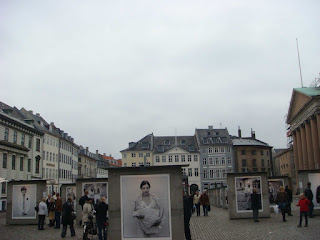
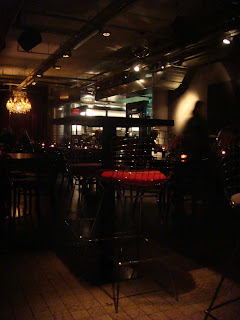
Besides this, you can see singers and artists performing on the streets.
Micro-urban events are part of Copenhagen daily landscape. In the picture below you can see a Lego event, where the inhabitants had the opportunity to show their creativity using Lego stones (no direct advertising was attached to this event).

- Different parts of the town cater different social classes and ages – there are areas, which are more family friendly (quiet and close to the beach); other areas (next to the S-train south west line) which offer modern housing conditions at an affordable price; and student areas or for others with a similar budget.
However, there are also some negative things that I noticed in Copenhagen, like:
- Youngsters (teenagers) and people in their 20-ies – use to excessively drink during the weekend and then stroll through the city at night. For the ones like me not used to this landscape, it was a bit shocking, to say at least.
- Christiania Quarter – is a city within a city located in Christianhavn Quarter. At the first sight it looks like a ghetto. The inhabitants of this community are people who refuse to integrate in the Danish community. This small quarter benefits of tax exemption, but no real business is run there. The community members have their own workshops, art shops, or whatever they have thought of doing to sustain themselves. While a few years ago, this place was not visited by external people, the police interviewned and now this part of the town can be crossed, at least during the day.
All in all, Copenhagen left me with the desire to return to this place some other time and enjoy more of what it has to offer. It is a very alive city so to say and this can energize its inhabitants.
Although I haven’t spent too much time in Copenhagen so that I know it very well, four days were enough for me to create an impression about the creative potential of the city.
Thus, I can now say that Copenhagen is one of the most creative cities in Europe, much more creative than the cities in the German space I would say. Why?
As I walked through the inner city, I recognized all the characteristics that Richard Florida was talking about when describing a creative city. That is:
- It has a good transportation system which promotes the use of ecological transportation means (bicycles and Christiania bicycles).
- It is open to gay and lesbian communities.
- It allows everyone to behave naturally and to show off their personalities.
- It offers enough leisure and entertainment activities catered to all tastes: opera, theaters, but also lots of coffee shops, bars, clubs.


Besides this, you can see singers and artists performing on the streets.
Micro-urban events are part of Copenhagen daily landscape. In the picture below you can see a Lego event, where the inhabitants had the opportunity to show their creativity using Lego stones (no direct advertising was attached to this event).

- Different parts of the town cater different social classes and ages – there are areas, which are more family friendly (quiet and close to the beach); other areas (next to the S-train south west line) which offer modern housing conditions at an affordable price; and student areas or for others with a similar budget.
However, there are also some negative things that I noticed in Copenhagen, like:
- Youngsters (teenagers) and people in their 20-ies – use to excessively drink during the weekend and then stroll through the city at night. For the ones like me not used to this landscape, it was a bit shocking, to say at least.
- Christiania Quarter – is a city within a city located in Christianhavn Quarter. At the first sight it looks like a ghetto. The inhabitants of this community are people who refuse to integrate in the Danish community. This small quarter benefits of tax exemption, but no real business is run there. The community members have their own workshops, art shops, or whatever they have thought of doing to sustain themselves. While a few years ago, this place was not visited by external people, the police interviewned and now this part of the town can be crossed, at least during the day.
All in all, Copenhagen left me with the desire to return to this place some other time and enjoy more of what it has to offer. It is a very alive city so to say and this can energize its inhabitants.
Tuesday, October 14, 2008
Lund - What do you need to have an exciting life in a small city?
When one usually thinks of small towns, especially in Romania, first characteristics that come to mind are: boring, uninteresting, limits oneself development, etc.
However, today I was impressed to visit the town of Lund and see what high quality of life people living there have. Lund is an university town situated in southern Sweden, about one hour by train from Copenhagen..
So what makes life so exciting in Lund?
1) Infrastructure – transportation system is very extensive and the town is bicycle friendly. The town is very well connected by railway and highway to bigger centers like Copenhagen (1h distance), Malmö (15min), Götheborg and Stockholm.
2) People - Lund is one of the oldest social sciences university in Europe, dating back from the 17th century. Thus you can see a lot of young people on the streets, which makes the town alive.
3) Social capital – there is an opera, a theater, an arts’ center, a football stadium, lots, lots of green public places.
Furthermore, the town has a lot of associations, including sports associations like: kajak association and a kayak school.
There is a special lively atmosphere that the town has even on Sundays, a day of the week when many other cities are practically dead.
I would like to extend the third point, about the social capital as I find it very interesting how the town succeeded to attract and keep the creative class there. From my daytrip impressions I can conclude that:
- the arts center provides a meeting place for young and old inhabitants of the town. On Sundays it transforms itself into a self-service restaurant and the place is roaming of young people, families with small children running around as well as eldery people with a young spirit.
- the numerous caffees and restaurants all over the inner city allow everyone to have an intelligent conversation in an enjoyable atmosphere while tasting different national food specialities. This high variety of places impressed me in such a small town. However, we need to be aware that the town is in Sweden, a country which is more foreign friendly than many other EU countries.
- the town has incredible many green areas and parks and is crossed by several water canals. The latter allows young and old to practice all sorts of water sports, especially kajak , rowing and swimming.
There would be so much to analyse at this town and learn from its features. However, I feel that in this case the local government has played a critical role in understanding the needs of the inhabitants and being aware that they need to keep the creative class in order to foster a sustainable economic growth. Furthermore, local government is conscious of the competition that it faces with neighbouring towns like Malmö or Copenhagen.
However, today I was impressed to visit the town of Lund and see what high quality of life people living there have. Lund is an university town situated in southern Sweden, about one hour by train from Copenhagen..
So what makes life so exciting in Lund?
1) Infrastructure – transportation system is very extensive and the town is bicycle friendly. The town is very well connected by railway and highway to bigger centers like Copenhagen (1h distance), Malmö (15min), Götheborg and Stockholm.
2) People - Lund is one of the oldest social sciences university in Europe, dating back from the 17th century. Thus you can see a lot of young people on the streets, which makes the town alive.
3) Social capital – there is an opera, a theater, an arts’ center, a football stadium, lots, lots of green public places.
Furthermore, the town has a lot of associations, including sports associations like: kajak association and a kayak school.
There is a special lively atmosphere that the town has even on Sundays, a day of the week when many other cities are practically dead.
I would like to extend the third point, about the social capital as I find it very interesting how the town succeeded to attract and keep the creative class there. From my daytrip impressions I can conclude that:
- the arts center provides a meeting place for young and old inhabitants of the town. On Sundays it transforms itself into a self-service restaurant and the place is roaming of young people, families with small children running around as well as eldery people with a young spirit.
- the numerous caffees and restaurants all over the inner city allow everyone to have an intelligent conversation in an enjoyable atmosphere while tasting different national food specialities. This high variety of places impressed me in such a small town. However, we need to be aware that the town is in Sweden, a country which is more foreign friendly than many other EU countries.
- the town has incredible many green areas and parks and is crossed by several water canals. The latter allows young and old to practice all sorts of water sports, especially kajak , rowing and swimming.
There would be so much to analyse at this town and learn from its features. However, I feel that in this case the local government has played a critical role in understanding the needs of the inhabitants and being aware that they need to keep the creative class in order to foster a sustainable economic growth. Furthermore, local government is conscious of the competition that it faces with neighbouring towns like Malmö or Copenhagen.
Subscribe to:
Posts (Atom)
Follow my blog


 Posts
All Comments
Posts
All Comments


