Kaffee melange, Stephansdom, Rathausplatz, MQ, Belvedere, Schönbrunn, WU, Frey Wille, Mariahilferstrasse, Hundertwasserhaus, Naschmarkt, Sissi, Hofburg, Balls, Walzer, Wienerschnitzel, Schubert, Coffeehouse Prückel, and not least important Zanoni & Zanoni....
No matter how many times I have the chance to visit this city, I go there with the same enthusiasm as the first time. The sole difference is that whereas the first time you let yourself guided by a traveler book, in my case I let myself carried away by the atmosphere, by my mood and my reviving memories.
So how do I want to spend my day in Vienna? I'll take my bike in the morning and start my day at my favorite spot: MQ, where I'll have breakfast and coffee cream. Then I'll make a bike tour of the ring, ride along the Danube Channel and stop by the Hundertwasser House, then continue towards the Central Park.
After chilling and reading from Barack Obama's biography, I'll take my bike and head towards the Naschmarkt, the best place to have lunch. Then gaze at the Frey Wille jewelery, still unaffordable at this point, and imagine a bracelet from the collection Ode to the Joy of Life around my arm. Heading to Schönbrunn to enjoy the gardens and the view above the city, then riding at full speed towards the WU (University of Business) and from there straight to an open air cinema. The evening will pass by somewhere along the Danube Channel in one of the jazz clubs or on one of the terraces and enjoying my last hours in my favorite city.
So looking forward to that!
Showing posts with label Travel. Show all posts
Showing posts with label Travel. Show all posts
Wednesday, May 20, 2009

Sunday, March 1, 2009
Hafen City
Hafen - City (in English Harbour City) is one of the largest new urban areas in development, whose aim is to increase Hamburg's, the second biggest city in Germany, appeal to investors and to attract the creative class. The idea behind is to revitalize part of the the harbour which has stayed as as unused area for many years and thus to connect the city north of Elbe to the (poorer) southern part of Hamburg.
This is however not the single project of this kind. Other cities such as Amsterdam, Copenhagen or Vancouver have developed similar projects and are are thus in a "competition" for increasing their value as a location.
When it comes to the Hafen City project, it promises to be much more than a residential or office area. It aims to become the "hottest" metropolitan district which offers a mix of cultural and leisure infrastructure, retail and hospitality outlets, inner-city living quarters, service-sector office space as well as public parks, squares, and waterfront promenades.
According to official sources, at the beginning of 2009, roughly 1.500 people live in HafenCity and about 3,000 people work there. Every building in itself is interesting and is meant to connect to the water theme. However, my current impression, from walking though the finalized areas, is that the buildings don't connect to each other. Although this may change in time when they start beautifying the areas with trees and flowers, it currently looks as a Legoland. Or as somebody has brought modern buildings each made by star architects and put them one after another to build a city. Unfortunately, the place still looks pretty "sterile" and "artificial". If one judges after the people who stroll there, it can be said that it is a museum alive...but not a place to live.
The prices for the residential apartments are rated at aprox. EUR 8000/ sqm for luxury apartments for sale, and at about EUR 5000 / sqm for middle range apartments, whereas the rent starts at EUR 670 / month for one-room apartments. Although authorities aim to make the area affordable, when we look at prices it seems already a bit up-priced compared to other Hamburg districts (except for the old city centre).
Here are some pictures to have a look yourself at the current state of development:


This is however not the single project of this kind. Other cities such as Amsterdam, Copenhagen or Vancouver have developed similar projects and are are thus in a "competition" for increasing their value as a location.
When it comes to the Hafen City project, it promises to be much more than a residential or office area. It aims to become the "hottest" metropolitan district which offers a mix of cultural and leisure infrastructure, retail and hospitality outlets, inner-city living quarters, service-sector office space as well as public parks, squares, and waterfront promenades.
According to official sources, at the beginning of 2009, roughly 1.500 people live in HafenCity and about 3,000 people work there. Every building in itself is interesting and is meant to connect to the water theme. However, my current impression, from walking though the finalized areas, is that the buildings don't connect to each other. Although this may change in time when they start beautifying the areas with trees and flowers, it currently looks as a Legoland. Or as somebody has brought modern buildings each made by star architects and put them one after another to build a city. Unfortunately, the place still looks pretty "sterile" and "artificial". If one judges after the people who stroll there, it can be said that it is a museum alive...but not a place to live.
The prices for the residential apartments are rated at aprox. EUR 8000/ sqm for luxury apartments for sale, and at about EUR 5000 / sqm for middle range apartments, whereas the rent starts at EUR 670 / month for one-room apartments. Although authorities aim to make the area affordable, when we look at prices it seems already a bit up-priced compared to other Hamburg districts (except for the old city centre).
Here are some pictures to have a look yourself at the current state of development:
Thursday, October 16, 2008
Copenhagen - the smallest creative European capital
My first visit to Scandinavia started with Copenhagen, the capital of Denmark. It is known to be the smallest capital in Europe.
Although I haven’t spent too much time in Copenhagen so that I know it very well, four days were enough for me to create an impression about the creative potential of the city.
Thus, I can now say that Copenhagen is one of the most creative cities in Europe, much more creative than the cities in the German space I would say. Why?
As I walked through the inner city, I recognized all the characteristics that Richard Florida was talking about when describing a creative city. That is:
- It has a good transportation system which promotes the use of ecological transportation means (bicycles and Christiania bicycles).
- It is open to gay and lesbian communities.
- It allows everyone to behave naturally and to show off their personalities.
- It offers enough leisure and entertainment activities catered to all tastes: opera, theaters, but also lots of coffee shops, bars, clubs.
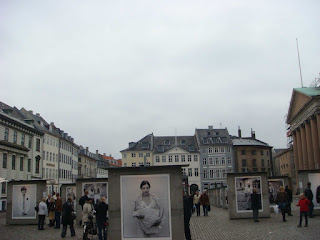
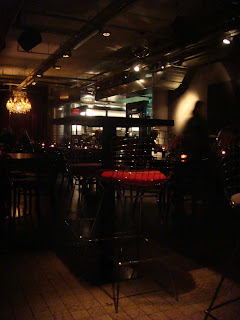
Besides this, you can see singers and artists performing on the streets.
Micro-urban events are part of Copenhagen daily landscape. In the picture below you can see a Lego event, where the inhabitants had the opportunity to show their creativity using Lego stones (no direct advertising was attached to this event).

- Different parts of the town cater different social classes and ages – there are areas, which are more family friendly (quiet and close to the beach); other areas (next to the S-train south west line) which offer modern housing conditions at an affordable price; and student areas or for others with a similar budget.
However, there are also some negative things that I noticed in Copenhagen, like:
- Youngsters (teenagers) and people in their 20-ies – use to excessively drink during the weekend and then stroll through the city at night. For the ones like me not used to this landscape, it was a bit shocking, to say at least.
- Christiania Quarter – is a city within a city located in Christianhavn Quarter. At the first sight it looks like a ghetto. The inhabitants of this community are people who refuse to integrate in the Danish community. This small quarter benefits of tax exemption, but no real business is run there. The community members have their own workshops, art shops, or whatever they have thought of doing to sustain themselves. While a few years ago, this place was not visited by external people, the police interviewned and now this part of the town can be crossed, at least during the day.
All in all, Copenhagen left me with the desire to return to this place some other time and enjoy more of what it has to offer. It is a very alive city so to say and this can energize its inhabitants.
Although I haven’t spent too much time in Copenhagen so that I know it very well, four days were enough for me to create an impression about the creative potential of the city.
Thus, I can now say that Copenhagen is one of the most creative cities in Europe, much more creative than the cities in the German space I would say. Why?
As I walked through the inner city, I recognized all the characteristics that Richard Florida was talking about when describing a creative city. That is:
- It has a good transportation system which promotes the use of ecological transportation means (bicycles and Christiania bicycles).
- It is open to gay and lesbian communities.
- It allows everyone to behave naturally and to show off their personalities.
- It offers enough leisure and entertainment activities catered to all tastes: opera, theaters, but also lots of coffee shops, bars, clubs.


Besides this, you can see singers and artists performing on the streets.
Micro-urban events are part of Copenhagen daily landscape. In the picture below you can see a Lego event, where the inhabitants had the opportunity to show their creativity using Lego stones (no direct advertising was attached to this event).

- Different parts of the town cater different social classes and ages – there are areas, which are more family friendly (quiet and close to the beach); other areas (next to the S-train south west line) which offer modern housing conditions at an affordable price; and student areas or for others with a similar budget.
However, there are also some negative things that I noticed in Copenhagen, like:
- Youngsters (teenagers) and people in their 20-ies – use to excessively drink during the weekend and then stroll through the city at night. For the ones like me not used to this landscape, it was a bit shocking, to say at least.
- Christiania Quarter – is a city within a city located in Christianhavn Quarter. At the first sight it looks like a ghetto. The inhabitants of this community are people who refuse to integrate in the Danish community. This small quarter benefits of tax exemption, but no real business is run there. The community members have their own workshops, art shops, or whatever they have thought of doing to sustain themselves. While a few years ago, this place was not visited by external people, the police interviewned and now this part of the town can be crossed, at least during the day.
All in all, Copenhagen left me with the desire to return to this place some other time and enjoy more of what it has to offer. It is a very alive city so to say and this can energize its inhabitants.
Tuesday, October 14, 2008
Lund - What do you need to have an exciting life in a small city?
When one usually thinks of small towns, especially in Romania, first characteristics that come to mind are: boring, uninteresting, limits oneself development, etc.
However, today I was impressed to visit the town of Lund and see what high quality of life people living there have. Lund is an university town situated in southern Sweden, about one hour by train from Copenhagen..
So what makes life so exciting in Lund?
1) Infrastructure – transportation system is very extensive and the town is bicycle friendly. The town is very well connected by railway and highway to bigger centers like Copenhagen (1h distance), Malmö (15min), Götheborg and Stockholm.
2) People - Lund is one of the oldest social sciences university in Europe, dating back from the 17th century. Thus you can see a lot of young people on the streets, which makes the town alive.
3) Social capital – there is an opera, a theater, an arts’ center, a football stadium, lots, lots of green public places.
Furthermore, the town has a lot of associations, including sports associations like: kajak association and a kayak school.
There is a special lively atmosphere that the town has even on Sundays, a day of the week when many other cities are practically dead.
I would like to extend the third point, about the social capital as I find it very interesting how the town succeeded to attract and keep the creative class there. From my daytrip impressions I can conclude that:
- the arts center provides a meeting place for young and old inhabitants of the town. On Sundays it transforms itself into a self-service restaurant and the place is roaming of young people, families with small children running around as well as eldery people with a young spirit.
- the numerous caffees and restaurants all over the inner city allow everyone to have an intelligent conversation in an enjoyable atmosphere while tasting different national food specialities. This high variety of places impressed me in such a small town. However, we need to be aware that the town is in Sweden, a country which is more foreign friendly than many other EU countries.
- the town has incredible many green areas and parks and is crossed by several water canals. The latter allows young and old to practice all sorts of water sports, especially kajak , rowing and swimming.
There would be so much to analyse at this town and learn from its features. However, I feel that in this case the local government has played a critical role in understanding the needs of the inhabitants and being aware that they need to keep the creative class in order to foster a sustainable economic growth. Furthermore, local government is conscious of the competition that it faces with neighbouring towns like Malmö or Copenhagen.
However, today I was impressed to visit the town of Lund and see what high quality of life people living there have. Lund is an university town situated in southern Sweden, about one hour by train from Copenhagen..
So what makes life so exciting in Lund?
1) Infrastructure – transportation system is very extensive and the town is bicycle friendly. The town is very well connected by railway and highway to bigger centers like Copenhagen (1h distance), Malmö (15min), Götheborg and Stockholm.
2) People - Lund is one of the oldest social sciences university in Europe, dating back from the 17th century. Thus you can see a lot of young people on the streets, which makes the town alive.
3) Social capital – there is an opera, a theater, an arts’ center, a football stadium, lots, lots of green public places.
Furthermore, the town has a lot of associations, including sports associations like: kajak association and a kayak school.
There is a special lively atmosphere that the town has even on Sundays, a day of the week when many other cities are practically dead.
I would like to extend the third point, about the social capital as I find it very interesting how the town succeeded to attract and keep the creative class there. From my daytrip impressions I can conclude that:
- the arts center provides a meeting place for young and old inhabitants of the town. On Sundays it transforms itself into a self-service restaurant and the place is roaming of young people, families with small children running around as well as eldery people with a young spirit.
- the numerous caffees and restaurants all over the inner city allow everyone to have an intelligent conversation in an enjoyable atmosphere while tasting different national food specialities. This high variety of places impressed me in such a small town. However, we need to be aware that the town is in Sweden, a country which is more foreign friendly than many other EU countries.
- the town has incredible many green areas and parks and is crossed by several water canals. The latter allows young and old to practice all sorts of water sports, especially kajak , rowing and swimming.
There would be so much to analyse at this town and learn from its features. However, I feel that in this case the local government has played a critical role in understanding the needs of the inhabitants and being aware that they need to keep the creative class in order to foster a sustainable economic growth. Furthermore, local government is conscious of the competition that it faces with neighbouring towns like Malmö or Copenhagen.
Sunday, October 5, 2008
Säntis Trip
After a month of daily raining and pale light the entire day, today we were lucky enough to have a sunny day with a clear, blue, autumn sky. Needless to say that I had to take advantage of this unique day I would say and go on a trip. And what can be a more appropriate activity than climbing up the Säntis on such a clear weather?
For the ones not yet initiated in the Appenzeller Region, Säntis is the highest peak in Eastern Switzerland, with an altitude of about 2500 m. As you can see from the pictures bellow, it has worth the effort to get there because the view was absolutely fantastic and left me breathless.
The Säntis peak is situated in the Region Appenzeller, which offers one of the most authentic Swiss landscapes and where you can still see how the inhabitants live according to the traditional, local customs.
Appenzeller is the land of the mauve Milka cows, of snow-white sheep, of crystal blue lakes and fresh green grass.
Enjoy the pictures!


For the ones not yet initiated in the Appenzeller Region, Säntis is the highest peak in Eastern Switzerland, with an altitude of about 2500 m. As you can see from the pictures bellow, it has worth the effort to get there because the view was absolutely fantastic and left me breathless.
The Säntis peak is situated in the Region Appenzeller, which offers one of the most authentic Swiss landscapes and where you can still see how the inhabitants live according to the traditional, local customs.
Appenzeller is the land of the mauve Milka cows, of snow-white sheep, of crystal blue lakes and fresh green grass.
Enjoy the pictures!
Subscribe to:
Posts (Atom)
Follow my blog


 Posts
All Comments
Posts
All Comments


