Heineken is a company that has drawn my attention lately due to its excellent execution of an expansion strategy, while protecting the base business. This is possible behind the new campaign and continuous engagement with the consumers via digital.
The initial steps were made with the launch of the new campaign "Open your world" at the end of 2010.
The campaign objectives as I understand it are:
1) Reposition Heineken beer from a commodity drink that targets men fans of football into a fashionable drink for responsible drinkers (both men and women)
2) Expand into new channels: night clubs and new consumer segments: women
3) Convert drinkers of spirits and cocktails to beer
4) Reposition Heineken brand from a distant brand to an approachable, close to consumers brand
The campaign was launched via TV, with a pre-seeding on youtube and facebook. While the first channel ensures high reach, the latter channels drive 1:1 conversation with consumers and thus brings the brand closer to its consumers.
Teaser video on youtube before actual campaign launch:
Each of the TV copies and initiatives is executed as launch and leverage and addresses one of the objectives stated above:
- first TV "the Entrance" - with the objective to reposition Heineken beer as a drink for fashionable/trendy consumers
- social responsibility campaign that addresses objective 2 and 3 above
The social responsibility initiative was coupled with engagement of consumers into developing night club concepts.
- TVC "the date" aimed to help positioning Heineken as a drink for trendy people.
The TVC has been extraordinarily leveraged also digitally via "behind the scenes" video distributed via youtube and facebook.
- commercial initiative to leverage a TV copy "The Date" further by leveraging seasonal events (Valentine's day in this case).
This is also a best in class example of bringing to life a social media strategy via always on conversation calendar. This time, the initiative is called "Serenade" and it is a leverage of the TVC "the date".
- TV copy "the date" (see above)
the Serenade social engagement was executed in phases:
1) create buzz:
2) launch invitation:
3) Italian amplification:
4) closing:
5) wrap up package to continue engagement:
- commercial initiative to develop a limited edition bottle by leveraging open innovation and engaging with consumers. Main phases:
- launch - invitation to consumers to start designing the heineken bottle via facebook.
- phase 2- sharing the progress on the design competition
- phase 3 - selection of the finalists
At the same time, Heineken is protecting its base business (targets football fans) via sponsorship of UEFA Champions League.
Also here, digital is leveraged via 1:1 conversation.
More to come on the impact of the campaign on sales and equity.
Showing posts with label Ideas. Show all posts
Showing posts with label Ideas. Show all posts
Wednesday, March 21, 2012

Thursday, October 1, 2009
An interesting business model

A few days ago, while walking on my way home, I've heard a funny noise on the street. When I looked at where it came from, I've noticed a small truck colorfully painted and with a logo saying "Frozen food home delivery" (translated into Romanian). Needless to mention how surprised I was by the business idea. Consequently, I've started wondering whether it is really profitable and who would be interested in their services.
I had a similar experience while I was in Hungary, in some very remote area, with the difference that in that case it was a mobile ice-cream truck which sold only ice-cream.
So, coming back to my initial question: is it a viable business idea?
You might say that it must be a viable idea, otherwise I wouldn't even have seen that truck. However, the Romanian business landscape provides us with several such business ideas, which didn't have a sound business plan behind it.
In this case, let's analyze the main revenues and the costs.
Before looking at the revenue and cost side, we should review the offer. The product offer is made of: frozen meat and vegetables, ice cream.
In order to look at the revenues, we should take into consideration the customer segments targeted.
1) The eldery -who have a limited mobility. However, on the minus side, they have a weak purchasing power due to their low pensions.
2) Moms with small children - who cannot carry their children to shopping with them as the public transport is not children - friendly. They also have a medium purchasing power.
3) Upper middle class families with housekeeper - where the housekeeper is also the cook. She prefers to spare the shopping trips in order to keep up with housework and other housekeeping needs. This segment is not limited by a food budget.
4) Single young professionals - who don't have time to go shopping and rarely cook at home. They also have a high income, and food costs make up for a low proportion of their overall costs. They go out in clubs on weekend and go on weekend breaks. They are very fashionable, buy brands and drive premium cars.
Prices:
a 10% plus compared to the hypermarkets.
On the cost side, the main cost positions are:
- driver's salary costs
- truck depreciation
- food losses - due to validity time
- fuel costs
Still, much depends on the number of activity days and on the average sales.
Nevertheless, this business model can only be successful in urban agglomerations, as in small towns and villages following problems arise:
- very limited disposable income
- no demand for more sophisticated products such as frozen vegetables
- dependence on subsistence economy
Consequently, two conclusions can be drawn:
- the business model is definitely not viable outside urban agglomeration areas
- in agglomeration areas, much depends on the overhead and on the areas visited by the truck, as well as on the number of working hours and days.
Are you aware of a similar business model in your country?
Thursday, June 4, 2009
City energy

Living in a city that you can draw your energy from is not such an easy thing to find. Having lived in several cities before of different sizes (from 40.000 inhabitants town to a city of 2 mio. inhabitants), I noticed that my energy and motivation has varied. Counter-intuitively, it is not direct proportional to the dimension of the city in terms of inhabitants. Rather it is the atmosphere that the city conveys.

In terms of energy, the city that would fit me best is Vienna. To me, this phenomenon is rather interesting and not completely explainable. What I feel is only the outcome of this atmosphere, namely that: the city belongs to me, that I am free to enjoy it and live it; it invites each one of you to discover it, to relax in the atmosphere of its imperial past and be a contemporary princess. Vienna is not too poor, but not too luxurious. To me, this is what assigns it that feeling of a city which belongs to everybody.

Not the same feeling is born when I am in Frankfurt A/M. The spirit of intensive corporate financial environment is everywhere and to relax in this city is not that easy. A totally different situation offers Zurich, which is a small big city, which means it is not a town, but also not a true metropolis. In Zurich you have that safety feeling that nothing can happen to you no matter where you walk or at what time. On the one hand it is a comfortable feeling, but on the other it can become a bit boring. Furthermore, leveraging all the amenities seems self-understood and you take the "luxurious" features (such as a ceramic water pipeline system) for granted. However, the significant difference versus Vienna is that all that high class features that you find in Zurich makes it obvious that the city belongs only to chosen ones.

What is the city that supplies you with energy?
Tuesday, May 19, 2009
Eric Schmidt speech at Univ. of Pennsylvania
Very inspiring video. Will try to follow his advice, although in incomparable less favorable circumstances.
Enjoy!
Enjoy!
Saturday, May 2, 2009
Branding yourself
 In a world where everything is branded, in order to succeed we need to learn how to brand ourselves. Tom Peters gives us an overview of where and how to start doing that.Tom Peters suggests following these steps:
1) What makes You different?
- Start by identifying the qualities or characteristics that make you distinctive from your competitors -- or your colleagues.
- What is the "feature-benefit model" that the brand called You offers?
- What do I want to be famous for?
2) How to market the brand You?
- Get involved in adjacent projects that help you gain visibility: teach in a local school, make some panel presentations, write in a local newspaper
- Being aware that everything You do matters and afects the You brand perception
- Drive word of mouth marketing - the key to any personal branding campaign
3) What's the real power of You?
- Learn to get and use power to grow the You brand
- As power is a matter of perception, act in a way so that you create a halo effect around your actions
- Organize your actions in terms of projects, which have the advantage of being: time limited, organized around deliverables, measurable, and leave you with braggables.
- Choose projects based on how you want to growth the brand You
4) How is brand You doing?
- Put together your own "users group" and ask them to provide you with feedback on your performance
- Know the value of the You brand on the market at every moment so that you know your bargaining power
Finally, I would like to share with you Tom Peters' quote, which I found extremely relevant and motivating to me:
"As you scope out the path your "career" will take, remember: the last thing you want to do is become a manager. Like "résumé," "manager" is an obsolete term. It's practically synonymous with "dead end job." What you want is a steady diet of more interesting, more challenging, more provocative projects. When you look at the progression of a career constructed out of projects, directionality is not only hard to track -- Which way is up? -- but it's also totally irrelevant."
His advice:
"Instead of making yourself a slave to the concept of a career ladder, reinvent yourself on a semiregular basis. Start by writing your own mission statement, to guide you as CEO of Me Inc. What turns you on? Learning something new? Gaining recognition for your skills as a technical wizard? Shepherding new ideas from concept to market? What's your personal definition of success? Money? Power? Fame? Or doing what you love? However you answer these questions, search relentlessly for job or project opportunities that fit your mission statement. And review that mission statement every six months to make sure you still believe what you wrote."
Good luck to all of you in this challenging endeavor!
Friday, May 1, 2009
Looking for a mentor...
Let's skip today's celebration of either "the working day" (in the more socialist market countries) or "dance into the May" (in the countries without a socialist history), and get down to business. Lately, I have been struggling with the idea of taking advantage of this crisis time when jobs are rather scarce and uninteresting, to consider building my own business.
There are four driving factors towards this entrepreneurial path:
1) Awareness that there are so many market opportunities in Romania and that I know where some of the opportunities lie
2) I know at least 4 other high potential people around me who are in the same situation: fresh graduates from leading European universities, with a lot of potential, who are in need for a navigation point.
3) The acknowledgment that the sooner you make a start-up business, the better because you don't have so much to lose and are rather used to the simple standard of living as a student.
4) I already have potential clients who are in need of my strategy & consulting skills and would trust to give me my first projects.
At the same time, however, I am aware of the risks and probability of failure that an entrepreneurial start-up encompasses. In line with this, for better or for worse, I have several potential alternative jobs, even in this crisis time. So, what I am missing now is a mentor with an entrepreneurial spirit. Until I find one, I am leveraging other people's mentors.
Check out the video below, which is the evidence that if you graduate from a world top university, it hardly ever means that you should pursue "standard" career paths.
Enjoy!
Some ideas from the presentation - on how to choose the focus area for the startup:
- Find what you are really passionate about
- Develop a product / service that solves one / some of people's problems/concerns
- Gather people around you who are at least as passionate about that thing as you are
- Keep your solution fast and simple
- Develop a corporate culture
- Know when to step down
There are four driving factors towards this entrepreneurial path:
1) Awareness that there are so many market opportunities in Romania and that I know where some of the opportunities lie
2) I know at least 4 other high potential people around me who are in the same situation: fresh graduates from leading European universities, with a lot of potential, who are in need for a navigation point.
3) The acknowledgment that the sooner you make a start-up business, the better because you don't have so much to lose and are rather used to the simple standard of living as a student.
4) I already have potential clients who are in need of my strategy & consulting skills and would trust to give me my first projects.
At the same time, however, I am aware of the risks and probability of failure that an entrepreneurial start-up encompasses. In line with this, for better or for worse, I have several potential alternative jobs, even in this crisis time. So, what I am missing now is a mentor with an entrepreneurial spirit. Until I find one, I am leveraging other people's mentors.
Check out the video below, which is the evidence that if you graduate from a world top university, it hardly ever means that you should pursue "standard" career paths.
Enjoy!
Some ideas from the presentation - on how to choose the focus area for the startup:
- Find what you are really passionate about
- Develop a product / service that solves one / some of people's problems/concerns
- Gather people around you who are at least as passionate about that thing as you are
- Keep your solution fast and simple
- Develop a corporate culture
- Know when to step down
Tuesday, April 28, 2009
Leveraging social media to make yourself famous
 Who would have thought a decade ago than one can become famous without being a star, nor investing a chunk of money in PR activities?
 Julia Allison is the mere example that it is possible to be well-known by having a steady, continuous presence in targeted online websites. Julia Allison has clever leveraged social media, Web 3.0 to position herself as a person notorious enough to be regularly followed by thousands of people.
And how did she achieved this? Wired magazine explains it succinctly:
1) It's not who you know, it's who you're next to.
When you go to a party, be sure to get photographed with well-known guests — even if they have no idea who you are. By posting these pics on your blog, you can make yourself look like an established personality.
2) Dress against type.
Heading to a party filled with khaki- clad geeks? Consider a flashy designer dress. Have a reputation for glamour? Stick with a simple T-shirt. Counterintuitive wardrobe choices keep your fans guessing.
3) Embrace enigma.
One day Allison announced that online haters were ruining her life and she'd never blog again. The next day she was back. Is she a train wreck or mastermind? Narcissist or self-satirist? No one knows — that's why they keep watching.
4) Let your minions fight your battles.
Sure, Allison has her critics — but all the discussion helps keep her in the spotlight. "Create two separate camps of supporters and attackers," says Timothy Ferriss, author of The 4-Hour Workweek. "Don't spend a lot of time defending yourself. If someone attacks you, let it sit there. If you respond, you don't give other people a chance to get engaged and defend you."
5) Be a hot woman with an exhibitionist streak.
I am not saying that one should do this. Rather, what I want to point to is the increasing role that social media plays and that being aware of this and cleverly leveraging it can increase the success of a business. I´ll touch upon this more in the next post.

Sunday, February 8, 2009
Integrating open innovation in the strategic planning process
Here is some piece of work to which I have dedicated my last three months. It's an academic paper which serves as a master thesis and represents the final step in finalizing the master program in Strategy and International Management from the University of St. Gallen. Before taking a look at it, I just want to warn you that for the non-specialists it may be very resource intensive to read as it contains many specialized terms.
Integrating open innovation in the strategic planning process
Integrating open innovation in the strategic planning process
Saturday, February 7, 2009
Vals


What is interesting though, is that for the first time visitors, the village seems to be at the end of the world, as one usually has to change trains two times and then take a bus for the rest 20 km in order to get there. For the "less initiated" with the Swiss small mountain roads, it is recommended to go by bus. As you will see from the images, the road is too narrow to allow two cars to take a turn.
While walking through the village, the first idea that stoke me was: how does this village survive and why is it such a touristic attraction? As previously mentioned, it is a remoted place, with a typical Swiss mountain landscape.

So how do they do it?
After a brief analysis from different information sources, the following important elements could be drawn, which contribute to Vals's success as touristic area:
- A very open local administration, that markets its region very well and which also took the role as a one time stop for everyone who is interested in visiting Vals. That is, they not only advertise the natural beauties of the region, but also already suggest possible touristic activities and active support the visitors in planing their trip, finding accommodation, offering insights about what is to be seen.
- The peasants which were mainly active in agriculture, saw and reapt the opportunity to diversify their income sources by enlarging their challet and accommodating a small number of tourists (aprox. 10-15). The provided food is advertised for originating from the area, as well as the served dishes.
- Vals has thermal water sources and posseses a hotel made of two eight storey buildings and the building which accommodates the baths. Although the two hotel buildings are architecturally typical for the seventies, the inspiration came when the most renowned Swiss architect Peter Zumtor was appointed to re-design the bath building. As in other examples such as the Guggenheim museum in Bilbao, Spain, the new building became "the point of attraction" for the entire village. By using only local materials and taking its inspiration from the particularities of the region, Zumtor has designed a special place for relaxation and health, where the combination of light and shade, open and enclosed spaces and linear elements contribute to a sensation appealing pilgrimage through the Vals region.
If I were to compare this to a place in Romania, I would name Baile Herculane as being the most similar to this place. Briefly described, they are also situated in the mountains, being not very well connected, but still close enough to big cities such as Craiova or Timisoara. It benefits of a mild, sub-Mediterranean climate and vegetation, of thermal waters and fresh mountain air. So, why isn't it as known as Vals is, and what can be done about it?
I would recommend to compare the three elements mentioned and see where this resort lies in terms of competitiveness in comparison to Vals. Take the example of Vals and particularize it for Baile Herculane region.
Saturday, December 6, 2008
Quality of Life vs. Quality of Living

While visiting the no.1. ranked city in the world on quality of living, I was thinking: Zurich is not even that special. Why should it be so high ranked?
Definitely, if I start looking at the factors which are taken into consideration for this classification, namely:
- internal stability, crime, law enforcement
- public services and transport
- banking services
- schools
- recreation
- housing
- natural environment
...then it might be understandable the outcome.
However, if a city is ranked number 1 in the quality of living does it mean that it has the same place when ranked to quality of life?
or in other words....
Would you prefer to live in a city with a high quality of living or in one with a high quality of life?
Had I been asked this question, I would definitely pick the second one, with the high quality of life. Why?
It's quite simple. Quality of life is a subjective measure and if I imagine been given the chance to live in a high ranked city on quality of living, but where I have no friends, I would feel miserable and I wouldn't care less that I can feel safe there, or that I have a high variety of recreation activities. What are they good for if I don't have anybody to go with to enjoy that high quality of living?
To sum up, I realized that I would prefer to be in a city where I have friends, even if it's dirtier, noisier, more dangerous and poorer in facilities than in a glamorous, safe, full fetched city all by myself.
That is, I'd rather stay in a 3* hotel which has a homey atmosphere than in a 5* all inclusive impersonal hotel.
What would you choose?
Sunday, November 9, 2008
Mobile phones - lifestyle or necessity?

"Romanians change mobile phones as they change socks"
If we compare this with the Americans' buying behavior, they change their mobile phones every 3 years.
Irrational behavior I would say if we think that the average monthly income is EUR 470. However, as for everything, there IS AN EXPLANATION.
For Romanians, mobile phones are fashion and lifestyle objects. Mobile phones are used as artifacts of a certain life quality or social status that people aim to have. So it happens that even though some don't afford it, Romanians feel the need to own the latest technology, the most fashionable mobile phone and to show off with it.
Post-communist Romania is a materialistic society. In this Romania, material objects such as a German car brand, a Nokia or Samsung mobile phone, play an essential role for one's image in the society.
This behavior is somehow explainable by the political history. In communist times, all people were almost uniform in what they owned. Now when they have a wide variety of goods on the market and they have the possibility to buy them, they try to differentiate from another by owning sometimes extravagant material goods.
However, I believe that Romania as EU member will change. Its citizen will learn from their EU peers that showing off doesn't bring too much long-term. Thus, they will prioritize their investment and will put more emphasis on: their homes, cultural and sport activities and health / wellness. They will understand that one doesn't show its quality of life by the car he/she drives, or the phone he/she speaks on,
BUT
by the cosiness of one's house, by the overall image, especially the appeal of healthy and fit person, who feels good in its body and who enjoys a rich cultural life.
Saturday, November 8, 2008
Helping China deal with the environmental issues

China is at crossroads. Environmental expectations are rising among its citizens along with the impatience and magnitude of environmental damage. World attention is focused on China as a result of its rapid economic growth and emergence on the global stage.
Yet, increasingly the image of China is as the world’s factory with pollution blanketing the landscape, urban areas clogged with cars, skies filled with emissions and rivers too polluted to sustain life or productive use. While this is a caricature, it contains many elements from reality that shouldn’t be ignored.
What can Chinese authorities do to address environmental issues?
- introduce tax incentives for recycling industrial land and thereby preserving agricultural land
- condition local official's promotion to achievement of environmental targets
- introduce systems of road pricing that reflects congestion costs and environmental damage
- appoint more and better trained staff within the authorities who are responsible for implementing the environmental regulations
Furthermore, the top down approach of dealing with environmental issues must be complemented by a bottom-up approach in which every company feels itself responsible for its effects on the environment.
How can EU help China in the environmental challenge?
- EU could assist China in reforms, could transfer cutting-edge technologies and develop demonstration project.
- enlist international NGOs to help with education and enforcement policies. Such measures would involve steering citizens and industries towards more energy-efficient and less environmentally damaging behaviour.
- Persuade multinational corporations (MNCs) to use their economic leverage to ensure that their Chinese partners adopt the best environmental practices is another alternative.
Furthermore, the prices of energy have been kept low to reflect merely the production costs. China could use EU’s approach of “user should pay” and extend reforms that make energy price align to the supply and demand and reflect externalities.
In line with the same reasoning “user should pay”, cars should be subject to safety inspections that include passing emissions tests on a regular basis. Policies that ban bicycles from some cities should be reversed, cycle tracks built and cycling, plus public transport, encouraged.
What can Chinese companies learn from EU companies approach to promote ecological awareness?
Chinese and foreign owned companies in China should be aware that:
- Corporate social responsibility can be a HR strategy for retaining the talents. This will become increasingly important as more and more young employees - especially those that are well educated and highly skilled - are looking at ethical issues.
- Corporate social responsibility has a positive effect on the bottom line and promotes team spirit. Organising staff outings to plant trees is one example of the kinds of activities that can help the environment while raising environmental awareness among employees and building team spirit. However, day to day activities such as paper recycling, limited use of air conditioning, turning off computer when they are not used have a more significant and longer impact.
- Along with demonstrating a commitment to corporate social responsibility and cutting costs, adopting an environmentally friendly policy can also be good for business. It can attract new customers while building community and investor confidence and expanding market share. Another key advantage is reduced overheads and operating costs in such areas as energy consumption, the production of waste and conservation of resources.
Finally, only the Chinese themselves can solve China’s environmental problems. The international community can help by persuasion, and where the environmental problems generated by China spread beyond its borders diplomatic pressure can legitimately be applied. But, the main role of the industrially developed countries will be to assist China through providing technology both commercially and through aid programmes.
Tuesday, November 4, 2008
Management consulting - in or out?

During one year, I have been gathering for and against impressions about working in management consulting, Now, I finally have a more round picture of this topic.
The main reasons for going into consulting are:
- If you don’t know for sure which industry you would prefer, consulting is a good option as it allows you to get a grisp of different industries in a short period of time .
- Type of activity – is very diverse, not in terms of the type of work that you’re actually doing, but rather in terms of areas/ topics / problems that you analyze.
- People – team work is the norm in consulting. If you like to argue for your ideas, to learn from others then that could be one place for you to be. Furthermore, consultants are known for being very analytical people, who tackle every problem in a structured way. They are also highly motivated to succeed and are willing to invest long hours in order to achieve this.
- Finally, it a springboard into middle management positions in external companies.
However, when you decide whether you should go into that direction, you should be aware of the following aspects:
- The activity is project-based, so basically you work in concentrated time frames. This means that you have to dedicate long hours to your job.
- Travel – is extensive. Expect to leave early on Mondays to different destinations and visit hotels, but not the countries. Do not expect to be home during the week. Friday is usually “office day”, which means that you return to your home office.
- Consulting is an intensive period in your life in which you have limited time for other activities. However, this is highly dependent on the office and country in which you are based.
- From consulting you acquire general industry knowledge, but not company specific. You have to be aware that if after such an experience you choose to join an external company, you won’t be offered top management positions, but rather middle management jobs. There is also the option of opening up your own business. In this case, consulting know how helps in developing and evaluating a business opportunity, as well as in leading teams, motivating people and understanding what are the key areas of each business.
Thus, it would be wise to evaluate your alternatives wisely:
do you want to be in a very active environment with extensive learning, work with very motivated and highly competitive people, but have no life outside it
OR
do you prefer to grow within an industrial company and have a more balanced lifestlye, but not as high results in terms of learning intensity and financial benefits?
Monday, October 27, 2008
It is still going down....

In the last three months I have witnessed the widening of the first financial crisis that I could follow on the news and understand its extent. Despite the fact that I see what are the reasons behind it, I am still stunned when I look at the evolution of shares since the beginning of this year. That it, in average shares have fallen with 70% since January 2008.
What is even worse is that we have been warned by economists that this is not the bottom of the crisis, although for us normal people it seems to be bad enough. Apparently it will become even worse, as the financial crisis extends to other industries and to the entire economy.
I will stop at the latter part of the previous statement as I find that this is where it hurts us. The scarcity in loans and credits allowance that exists nowadays has a direct negative impact on the businesses, that are stopped from growing through the use of long-term credit lines for diversification purposes. What is more, businesses are affected short-term also through the cut of the short-term credits. These ensured a balanced working capital and thus smooth transactions between producers and their customers.
There is even more to this. As firms cannot grow anymore and global demand for all products contracts (see the demand trend for crude oil, whose price fell to 40% of its value this spring), production level decrease. This leads to a decreased employee capacity, which will be met through:
- switching some of the full-time positions to part-time work
- temporary and permanent layoffs
From here you now the way: unemployment -> temporary increasing need for social security -> higher budget deficits + decrease in economic growth -> need for external financing -> increasing role of IMF, European Central Bank -> increasing importance of the state again
All in all, the future doesn't look bright.....it seems grim and this raises my concerns about the conditions of launching into my professional career. For sure it's not the best time for entering the labour market, but there's little room for me to choose.
Sunday, October 26, 2008
Winter and the tourism industry

After a sad, rainy autumn, winter has finally come to Switzerland. And it's not only me who is happy that at least now I can clearly define what season it is...Happier than me are the hotel managers who, despite the financial crisis, have their hotels fully booked for the Christmas - New Year time frame.
So, how can this be explained?
I have two arguments for this:
1) Most of the bookings for the Christmas- New Year timeframe were made well in advance, that is in July - August, when the crisis didn't seem so grim. Added to this, I have a secondary cultural explanation for this behavior. As most of the tourists are Germanic, which have an increase need for planning in advance, they wanted to make sure that they have secured well in advance every detail of their winter holiday.
2) The impact of the crisis on the individual people comes with a delay of a few months - this means that the demand for vacations will decrease for spring and summer holidays which are to be booked now or until December.
How come this delay?
It is part of a vicious circle, which starts with the scarcity of money and loans, which negatively affect the growth needs of the businesses. What is more, as people decrease their spending and increase savings in the expectation of bad times, the demand for products and thus the industrial production decreases. This leads to a decrease in the business activity, in shrinking capacity and temporary layoffs.
To conclude, the tourism business will notice the effects of the crisis and recessionary period starting with the end of this year.
Thursday, October 16, 2008
Copenhagen - the smallest creative European capital
My first visit to Scandinavia started with Copenhagen, the capital of Denmark. It is known to be the smallest capital in Europe.
Although I haven’t spent too much time in Copenhagen so that I know it very well, four days were enough for me to create an impression about the creative potential of the city.
Thus, I can now say that Copenhagen is one of the most creative cities in Europe, much more creative than the cities in the German space I would say. Why?
As I walked through the inner city, I recognized all the characteristics that Richard Florida was talking about when describing a creative city. That is:
- It has a good transportation system which promotes the use of ecological transportation means (bicycles and Christiania bicycles).
- It is open to gay and lesbian communities.
- It allows everyone to behave naturally and to show off their personalities.
- It offers enough leisure and entertainment activities catered to all tastes: opera, theaters, but also lots of coffee shops, bars, clubs.
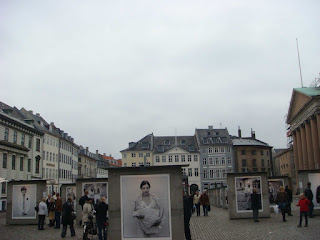
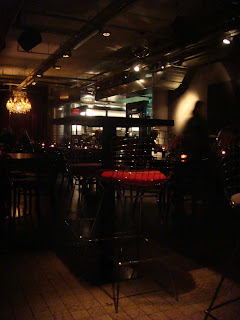
Besides this, you can see singers and artists performing on the streets.
Micro-urban events are part of Copenhagen daily landscape. In the picture below you can see a Lego event, where the inhabitants had the opportunity to show their creativity using Lego stones (no direct advertising was attached to this event).

- Different parts of the town cater different social classes and ages – there are areas, which are more family friendly (quiet and close to the beach); other areas (next to the S-train south west line) which offer modern housing conditions at an affordable price; and student areas or for others with a similar budget.
However, there are also some negative things that I noticed in Copenhagen, like:
- Youngsters (teenagers) and people in their 20-ies – use to excessively drink during the weekend and then stroll through the city at night. For the ones like me not used to this landscape, it was a bit shocking, to say at least.
- Christiania Quarter – is a city within a city located in Christianhavn Quarter. At the first sight it looks like a ghetto. The inhabitants of this community are people who refuse to integrate in the Danish community. This small quarter benefits of tax exemption, but no real business is run there. The community members have their own workshops, art shops, or whatever they have thought of doing to sustain themselves. While a few years ago, this place was not visited by external people, the police interviewned and now this part of the town can be crossed, at least during the day.
All in all, Copenhagen left me with the desire to return to this place some other time and enjoy more of what it has to offer. It is a very alive city so to say and this can energize its inhabitants.
Although I haven’t spent too much time in Copenhagen so that I know it very well, four days were enough for me to create an impression about the creative potential of the city.
Thus, I can now say that Copenhagen is one of the most creative cities in Europe, much more creative than the cities in the German space I would say. Why?
As I walked through the inner city, I recognized all the characteristics that Richard Florida was talking about when describing a creative city. That is:
- It has a good transportation system which promotes the use of ecological transportation means (bicycles and Christiania bicycles).
- It is open to gay and lesbian communities.
- It allows everyone to behave naturally and to show off their personalities.
- It offers enough leisure and entertainment activities catered to all tastes: opera, theaters, but also lots of coffee shops, bars, clubs.


Besides this, you can see singers and artists performing on the streets.
Micro-urban events are part of Copenhagen daily landscape. In the picture below you can see a Lego event, where the inhabitants had the opportunity to show their creativity using Lego stones (no direct advertising was attached to this event).

- Different parts of the town cater different social classes and ages – there are areas, which are more family friendly (quiet and close to the beach); other areas (next to the S-train south west line) which offer modern housing conditions at an affordable price; and student areas or for others with a similar budget.
However, there are also some negative things that I noticed in Copenhagen, like:
- Youngsters (teenagers) and people in their 20-ies – use to excessively drink during the weekend and then stroll through the city at night. For the ones like me not used to this landscape, it was a bit shocking, to say at least.
- Christiania Quarter – is a city within a city located in Christianhavn Quarter. At the first sight it looks like a ghetto. The inhabitants of this community are people who refuse to integrate in the Danish community. This small quarter benefits of tax exemption, but no real business is run there. The community members have their own workshops, art shops, or whatever they have thought of doing to sustain themselves. While a few years ago, this place was not visited by external people, the police interviewned and now this part of the town can be crossed, at least during the day.
All in all, Copenhagen left me with the desire to return to this place some other time and enjoy more of what it has to offer. It is a very alive city so to say and this can energize its inhabitants.
Tuesday, October 14, 2008
Lund - What do you need to have an exciting life in a small city?
When one usually thinks of small towns, especially in Romania, first characteristics that come to mind are: boring, uninteresting, limits oneself development, etc.
However, today I was impressed to visit the town of Lund and see what high quality of life people living there have. Lund is an university town situated in southern Sweden, about one hour by train from Copenhagen..
So what makes life so exciting in Lund?
1) Infrastructure – transportation system is very extensive and the town is bicycle friendly. The town is very well connected by railway and highway to bigger centers like Copenhagen (1h distance), Malmö (15min), Götheborg and Stockholm.
2) People - Lund is one of the oldest social sciences university in Europe, dating back from the 17th century. Thus you can see a lot of young people on the streets, which makes the town alive.
3) Social capital – there is an opera, a theater, an arts’ center, a football stadium, lots, lots of green public places.
Furthermore, the town has a lot of associations, including sports associations like: kajak association and a kayak school.
There is a special lively atmosphere that the town has even on Sundays, a day of the week when many other cities are practically dead.
I would like to extend the third point, about the social capital as I find it very interesting how the town succeeded to attract and keep the creative class there. From my daytrip impressions I can conclude that:
- the arts center provides a meeting place for young and old inhabitants of the town. On Sundays it transforms itself into a self-service restaurant and the place is roaming of young people, families with small children running around as well as eldery people with a young spirit.
- the numerous caffees and restaurants all over the inner city allow everyone to have an intelligent conversation in an enjoyable atmosphere while tasting different national food specialities. This high variety of places impressed me in such a small town. However, we need to be aware that the town is in Sweden, a country which is more foreign friendly than many other EU countries.
- the town has incredible many green areas and parks and is crossed by several water canals. The latter allows young and old to practice all sorts of water sports, especially kajak , rowing and swimming.
There would be so much to analyse at this town and learn from its features. However, I feel that in this case the local government has played a critical role in understanding the needs of the inhabitants and being aware that they need to keep the creative class in order to foster a sustainable economic growth. Furthermore, local government is conscious of the competition that it faces with neighbouring towns like Malmö or Copenhagen.
However, today I was impressed to visit the town of Lund and see what high quality of life people living there have. Lund is an university town situated in southern Sweden, about one hour by train from Copenhagen..
So what makes life so exciting in Lund?
1) Infrastructure – transportation system is very extensive and the town is bicycle friendly. The town is very well connected by railway and highway to bigger centers like Copenhagen (1h distance), Malmö (15min), Götheborg and Stockholm.
2) People - Lund is one of the oldest social sciences university in Europe, dating back from the 17th century. Thus you can see a lot of young people on the streets, which makes the town alive.
3) Social capital – there is an opera, a theater, an arts’ center, a football stadium, lots, lots of green public places.
Furthermore, the town has a lot of associations, including sports associations like: kajak association and a kayak school.
There is a special lively atmosphere that the town has even on Sundays, a day of the week when many other cities are practically dead.
I would like to extend the third point, about the social capital as I find it very interesting how the town succeeded to attract and keep the creative class there. From my daytrip impressions I can conclude that:
- the arts center provides a meeting place for young and old inhabitants of the town. On Sundays it transforms itself into a self-service restaurant and the place is roaming of young people, families with small children running around as well as eldery people with a young spirit.
- the numerous caffees and restaurants all over the inner city allow everyone to have an intelligent conversation in an enjoyable atmosphere while tasting different national food specialities. This high variety of places impressed me in such a small town. However, we need to be aware that the town is in Sweden, a country which is more foreign friendly than many other EU countries.
- the town has incredible many green areas and parks and is crossed by several water canals. The latter allows young and old to practice all sorts of water sports, especially kajak , rowing and swimming.
There would be so much to analyse at this town and learn from its features. However, I feel that in this case the local government has played a critical role in understanding the needs of the inhabitants and being aware that they need to keep the creative class in order to foster a sustainable economic growth. Furthermore, local government is conscious of the competition that it faces with neighbouring towns like Malmö or Copenhagen.
Sunday, October 12, 2008
Sustainability of the third way

Yesterday I was talking about how German women give up their careers entirely in order to have a family and about the predominance of the men in the German business landscape.
In the last two days I've faced a totally different model, usually called in economics "the third way". Namely it is the economic model of the Scandinavian countries. This model is characterized by solidarity, an extensive social system financed through a high income taxation on level.
So is it efficient?
At the first view it seems to be as streets are clean, transportation system is very developed. What is more, what I found interesting here is the high proportion of young mothers with children. That is with 25 women already have 2 kids. Even if at the first sight this has made a strong impression on me, I found three explanations for this phenomenon.
1) The extensive social system that I was previously talking about supports young people to have children early in their adult lives.
2) There is a different mentality that I've encountered in these countries. People get together and form a couple and then a family early in their lives, but in 60% of cases these relationships end.
3) The labor market is flexible enough to offer different possibilities to work through: part time and flexible time working, teleworking or other forms of working from home.
All these encourage couples to have a family soon enough as, contrary to Romania, they don't have think of the financial challenges. The state has sufficient resources to support them in such cases.
What other explanations do you see to be plausible?
Reading a culture by its airplane passengers
Never before had I made a connection between the passengers that one meets on a route and cultural particularities. However, this time it was too obvious not to notice.
While flying from Zurich to Copenhagen via Düsseldorf, I couldn’t helped notice that 90% of the passengers in the plane were 30+ German males, all wearing a business casual outfit. Taking by their looks, they were all on business trips and not as tourists. And so I wondered: where are all the working women? Germany is a country with a proportional number of men and women, so why this phenomenon?
Then I remembered what I discussed with some German colleagues not too long ago. Apparently Germany is one of the men dominated countries in the EU. That is, 50% of women over 30 in Germany stay at home or have part time jobs. Furthermore, some of my German colleagues recall that they’ve always had their mom at home around and so did their friends.
However, I expect that with time the mentality has changed and now women consider having a family and a job. But, surprise.... Yesterday I talked to a female German colleague in her 20-ies, who told me some things which surprised me to say the least. She shared her view with me on this family and career issues. Apparently she doesn’t want a career in investment banking, or in other challenging businesses.
What is more, she would prefer to have a routine job and plenty of time than a challenging job but less time. This is not valid for the future 30+, but also for now. Moreover, she doesn’t imagine having a family with children and not being the entire day home with them. In other words, she intends not to work anymore when she has children.
If I compare this to the other countries, namely to Eastern European countries and Romania in particular, things are quite different. Romanian females have both a career and children and can still make it. The main reason for this situation is financial, but now it has become more a lifestyle.
All in all, it’s quite interesting to compare cultures on dimensions which are less obvious for outsiders.
While flying from Zurich to Copenhagen via Düsseldorf, I couldn’t helped notice that 90% of the passengers in the plane were 30+ German males, all wearing a business casual outfit. Taking by their looks, they were all on business trips and not as tourists. And so I wondered: where are all the working women? Germany is a country with a proportional number of men and women, so why this phenomenon?
Then I remembered what I discussed with some German colleagues not too long ago. Apparently Germany is one of the men dominated countries in the EU. That is, 50% of women over 30 in Germany stay at home or have part time jobs. Furthermore, some of my German colleagues recall that they’ve always had their mom at home around and so did their friends.
However, I expect that with time the mentality has changed and now women consider having a family and a job. But, surprise.... Yesterday I talked to a female German colleague in her 20-ies, who told me some things which surprised me to say the least. She shared her view with me on this family and career issues. Apparently she doesn’t want a career in investment banking, or in other challenging businesses.
What is more, she would prefer to have a routine job and plenty of time than a challenging job but less time. This is not valid for the future 30+, but also for now. Moreover, she doesn’t imagine having a family with children and not being the entire day home with them. In other words, she intends not to work anymore when she has children.
If I compare this to the other countries, namely to Eastern European countries and Romania in particular, things are quite different. Romanian females have both a career and children and can still make it. The main reason for this situation is financial, but now it has become more a lifestyle.
All in all, it’s quite interesting to compare cultures on dimensions which are less obvious for outsiders.
Tuesday, October 7, 2008
What do financial markets and relationships have in common?
"Once confidence is destroyed, it's not easily restored" says Angel...
This statement is usually used in the context of a relationship when one of the partners loses trust in the other because of an incident. However, in this case, the sentence refers to the financial markets. So, what is it all about? Who is the actor in the financial market that cannot be trusted and who is the other party?
According to academics, the injection of governmental money that is offered to the banks in distress is not enough to counteract the descending trend of stocks on the market. This happens because banks are afraid that they do not hold enough information about the other players in the industry, so they have limited willingness to lend money to fellow banks.
To use the relationship metaphor again, let's imagine that one of the partners does something immoral, which makes the other one to lose confidence. After such an event it takes significant time and efforts from both sides for the trust to be reinforced again. Furthermore, the next time you will be even more careful knowing what it can happen. As the saying goes " after you got burned with soup, you will blow even in yoghurt".
Back to the financial markets. What does this mean? Basically, as long as banks don't start trusting one another and start to lend money to each other (credits), we risk not to have enough liquidity on the market. This can happen despite all the bad asset purchases made by the governments and despite all the insurances which governments now give to the financial players.
So, is it accurate to compare the relationships among banks with interpersonal relationships?
Probably the complexity of both lies in different aspects, but they seem to have some things in common, namely the need for:
- trust / confidence
- open communication and information exchange
- long term benefit orientation
This statement is usually used in the context of a relationship when one of the partners loses trust in the other because of an incident. However, in this case, the sentence refers to the financial markets. So, what is it all about? Who is the actor in the financial market that cannot be trusted and who is the other party?
According to academics, the injection of governmental money that is offered to the banks in distress is not enough to counteract the descending trend of stocks on the market. This happens because banks are afraid that they do not hold enough information about the other players in the industry, so they have limited willingness to lend money to fellow banks.
To use the relationship metaphor again, let's imagine that one of the partners does something immoral, which makes the other one to lose confidence. After such an event it takes significant time and efforts from both sides for the trust to be reinforced again. Furthermore, the next time you will be even more careful knowing what it can happen. As the saying goes " after you got burned with soup, you will blow even in yoghurt".
Back to the financial markets. What does this mean? Basically, as long as banks don't start trusting one another and start to lend money to each other (credits), we risk not to have enough liquidity on the market. This can happen despite all the bad asset purchases made by the governments and despite all the insurances which governments now give to the financial players.
So, is it accurate to compare the relationships among banks with interpersonal relationships?
Probably the complexity of both lies in different aspects, but they seem to have some things in common, namely the need for:
- trust / confidence
- open communication and information exchange
- long term benefit orientation
Subscribe to:
Posts (Atom)
Follow my blog


 Posts
All Comments
Posts
All Comments


