Very inspiring video. Will try to follow his advice, although in incomparable less favorable circumstances.
Enjoy!
Showing posts with label Global issues. Show all posts
Showing posts with label Global issues. Show all posts
Tuesday, May 19, 2009

Tuesday, April 28, 2009
Leveraging social media to make yourself famous
 Who would have thought a decade ago than one can become famous without being a star, nor investing a chunk of money in PR activities?
 Julia Allison is the mere example that it is possible to be well-known by having a steady, continuous presence in targeted online websites. Julia Allison has clever leveraged social media, Web 3.0 to position herself as a person notorious enough to be regularly followed by thousands of people.
And how did she achieved this? Wired magazine explains it succinctly:
1) It's not who you know, it's who you're next to.
When you go to a party, be sure to get photographed with well-known guests — even if they have no idea who you are. By posting these pics on your blog, you can make yourself look like an established personality.
2) Dress against type.
Heading to a party filled with khaki- clad geeks? Consider a flashy designer dress. Have a reputation for glamour? Stick with a simple T-shirt. Counterintuitive wardrobe choices keep your fans guessing.
3) Embrace enigma.
One day Allison announced that online haters were ruining her life and she'd never blog again. The next day she was back. Is she a train wreck or mastermind? Narcissist or self-satirist? No one knows — that's why they keep watching.
4) Let your minions fight your battles.
Sure, Allison has her critics — but all the discussion helps keep her in the spotlight. "Create two separate camps of supporters and attackers," says Timothy Ferriss, author of The 4-Hour Workweek. "Don't spend a lot of time defending yourself. If someone attacks you, let it sit there. If you respond, you don't give other people a chance to get engaged and defend you."
5) Be a hot woman with an exhibitionist streak.
I am not saying that one should do this. Rather, what I want to point to is the increasing role that social media plays and that being aware of this and cleverly leveraging it can increase the success of a business. I´ll touch upon this more in the next post.

Sunday, February 22, 2009
Friday, January 16, 2009
Economy today...
Some clever cartoons found on the web on nowaday's economic situation. Enjoy!
Economy today
View SlideShare presentation or Upload your own.

Saturday, December 20, 2008
It's the most wonderful time of the year...

...with the kids jingle belling and everyone telling you "Be of good cheer"...
...with the fuel price dropping and everyone shopping...
But why is this the most wonderful time of the year? Depending on whom one asks this question, the reasons might be:
- we have a new government which promises us to finally build the first highway to connect us to Hungary
- US carmakers can already celebrate Christmas with the $17.4 bio. emergency loans received from the government
- oil price is at 25% of its value 6 months ago
- Fed decreased interest rate to 0% in an attempt to boost the economy from recession
Even though outlooks look grim, we push the "PAUSE" button for the next two weeks and enjoy Christmas season.
- we have a new government which promises us to finally build the first highway to connect us to Hungary
- US carmakers can already celebrate Christmas with the $17.4 bio. emergency loans received from the government
- oil price is at 25% of its value 6 months ago
- Fed decreased interest rate to 0% in an attempt to boost the economy from recession
Even though outlooks look grim, we push the "PAUSE" button for the next two weeks and enjoy Christmas season.
But what is left of the original Christmas spirit and what do we actually celebrate nowadays?
If we look around, we notice that the Christmas spirit has been downgraded to selfish and materialistic concerns about: where do we go on holiday? how much meat, pastry and drinks should we buy? are there enough presents under the tree?That is, we have lost any connection with what we are really celebrating.We know who's responsible for this, but is it really that bad?
If we look around, we notice that the Christmas spirit has been downgraded to selfish and materialistic concerns about: where do we go on holiday? how much meat, pastry and drinks should we buy? are there enough presents under the tree?That is, we have lost any connection with what we are really celebrating.We know who's responsible for this, but is it really that bad?
Let's try to look at this through different glasses and appreciate the fact that the winter holiday season allows us to spend more time with our family, to disconnect our brains from the daily activities and just enjoy the free time. However, what is even more problematic is that we allow ourselves free time only so rarely and that we spend most of lives challenging ourselves. The desire for self improvement is indeed positive, but let's not forget that we should allow our minds and bodies a rest more frequently than 2 times a year.
With this, I wish you a happy Christmas and take care.
Sunday, November 9, 2008
BRIC - A shortcut to remember

Newspapers are full with information regarding automotive companies who open or will in the near future open a production capacity in Russia.
Ford, Toyota...they already set ground in Russia. Now, it's GM's turn to begin producing their cars in Russia. Fiat, Hyundai, Nissan and Suzuki announce to follow the trend.
The paradox is that even though automotive companies struggle now with decreasing turnovers and profits, they still invest in factories in Russia. How come?
Markets in developed countries are already very saturated and market shares are rather stable.
BRIC countries (Brasil, Russia, India, China) are the among the developing economies that play an increasing role in the world's economy.
Especially in times of crisis, when developed countries are in recession, these countries continue their ascending trend.
Russia and China are countries with huge market potential as the economic growth leads to an increasing proportion of the middle class who affords to buy cars and new technology products.
So why Russia and not China?
Although the regulations on foreign companies access in China have become less stringent, automotive companies still need a lot of authorizations and licenses and undergo shareholding restrictions (49%) if they want to open up a production capacity in the mainland.
In contrast, Russia's laws are a bit more lax in this regard and allow wholly owned foreign businesses. Still, companies have to fight the red tape and long processing times or need to develop good ties with the local officials in order speed up processes.
Despite this, foreign companies take the risk because Russia will be one of the "promised lands" for the automotive business in the next years.
But why open up a production factory and not use imports?
The most important reasons behind their thinking are:
- lower labor costs
- access to cheap resources (all kinds of metals)
- speed of distribution
- avoid taxes on imports
To sum up, while automotive companies standstill or even shut down some production capacities in developed countries, they open up new production facilities in Russia, as well as in other BRIC countries. The latter will be their main distribution markets in the future and everybody wants to gain a foothold in their markets to be able to capture a share of the huge market potential.
Who's still profitable in times of crisis?
 The last two months trained us to put up with bad news every day. We get up in the morning and open the newspaper with one idea in mind:
 which bank went bust this time?
whom does the government rescue today?
or
who is is taking over whom?
However, even in such difficult times there are some companies that have not only kept their profitability level, but increased it.
So, who are they? What are their strategies so that we can transfer them to other industries?
One industry is the oil industry. Companies such as: Exxon Mobile, Royal Dutch Shell have announced increasing profits in the third quarter.
The key question is: why?
Recall the situation on the market a few months ago, when the oil prices rocketed to $147 / barrel. At that point in time, these companies didn't suffer as they had oil reserves for a few months time. On the contrary... they used the market conditions to transfer the increase in price to the end consumers. As such, they registered increasing turnover, while keeping the same cost level.
And now?
Now, the price of the barrel has plummeted to $64, thus these companies can secure their oil reserves for a few months time at low prices. Thus, they won't be affected short term by the expected price increase to $100 / barrel.
So, are they the winners?
For now, they are the winners. However, the effect of the crisis will be visible in their income statements in a few months time, because of the lower fuel prices and because of the consumers' tendency to drive less and choose more fuel efficient cars.
That is, this strategy is not sustainable in the long-run. That's why we see oil companies diversify in related fields such as regenerable energies, which is definitely a high potential market in the future.
Finally, the oil industry is not the only one who doesn't suffer in times of crisis. Other industries are: pharma, tabbacco and consumer staples, known in the investors' world as "defensive industries".
Saturday, November 8, 2008
Helping China deal with the environmental issues

China is at crossroads. Environmental expectations are rising among its citizens along with the impatience and magnitude of environmental damage. World attention is focused on China as a result of its rapid economic growth and emergence on the global stage.
Yet, increasingly the image of China is as the world’s factory with pollution blanketing the landscape, urban areas clogged with cars, skies filled with emissions and rivers too polluted to sustain life or productive use. While this is a caricature, it contains many elements from reality that shouldn’t be ignored.
What can Chinese authorities do to address environmental issues?
- introduce tax incentives for recycling industrial land and thereby preserving agricultural land
- condition local official's promotion to achievement of environmental targets
- introduce systems of road pricing that reflects congestion costs and environmental damage
- appoint more and better trained staff within the authorities who are responsible for implementing the environmental regulations
Furthermore, the top down approach of dealing with environmental issues must be complemented by a bottom-up approach in which every company feels itself responsible for its effects on the environment.
How can EU help China in the environmental challenge?
- EU could assist China in reforms, could transfer cutting-edge technologies and develop demonstration project.
- enlist international NGOs to help with education and enforcement policies. Such measures would involve steering citizens and industries towards more energy-efficient and less environmentally damaging behaviour.
- Persuade multinational corporations (MNCs) to use their economic leverage to ensure that their Chinese partners adopt the best environmental practices is another alternative.
Furthermore, the prices of energy have been kept low to reflect merely the production costs. China could use EU’s approach of “user should pay” and extend reforms that make energy price align to the supply and demand and reflect externalities.
In line with the same reasoning “user should pay”, cars should be subject to safety inspections that include passing emissions tests on a regular basis. Policies that ban bicycles from some cities should be reversed, cycle tracks built and cycling, plus public transport, encouraged.
What can Chinese companies learn from EU companies approach to promote ecological awareness?
Chinese and foreign owned companies in China should be aware that:
- Corporate social responsibility can be a HR strategy for retaining the talents. This will become increasingly important as more and more young employees - especially those that are well educated and highly skilled - are looking at ethical issues.
- Corporate social responsibility has a positive effect on the bottom line and promotes team spirit. Organising staff outings to plant trees is one example of the kinds of activities that can help the environment while raising environmental awareness among employees and building team spirit. However, day to day activities such as paper recycling, limited use of air conditioning, turning off computer when they are not used have a more significant and longer impact.
- Along with demonstrating a commitment to corporate social responsibility and cutting costs, adopting an environmentally friendly policy can also be good for business. It can attract new customers while building community and investor confidence and expanding market share. Another key advantage is reduced overheads and operating costs in such areas as energy consumption, the production of waste and conservation of resources.
Finally, only the Chinese themselves can solve China’s environmental problems. The international community can help by persuasion, and where the environmental problems generated by China spread beyond its borders diplomatic pressure can legitimately be applied. But, the main role of the industrially developed countries will be to assist China through providing technology both commercially and through aid programmes.
Tuesday, October 7, 2008
What do financial markets and relationships have in common?
"Once confidence is destroyed, it's not easily restored" says Angel...
This statement is usually used in the context of a relationship when one of the partners loses trust in the other because of an incident. However, in this case, the sentence refers to the financial markets. So, what is it all about? Who is the actor in the financial market that cannot be trusted and who is the other party?
According to academics, the injection of governmental money that is offered to the banks in distress is not enough to counteract the descending trend of stocks on the market. This happens because banks are afraid that they do not hold enough information about the other players in the industry, so they have limited willingness to lend money to fellow banks.
To use the relationship metaphor again, let's imagine that one of the partners does something immoral, which makes the other one to lose confidence. After such an event it takes significant time and efforts from both sides for the trust to be reinforced again. Furthermore, the next time you will be even more careful knowing what it can happen. As the saying goes " after you got burned with soup, you will blow even in yoghurt".
Back to the financial markets. What does this mean? Basically, as long as banks don't start trusting one another and start to lend money to each other (credits), we risk not to have enough liquidity on the market. This can happen despite all the bad asset purchases made by the governments and despite all the insurances which governments now give to the financial players.
So, is it accurate to compare the relationships among banks with interpersonal relationships?
Probably the complexity of both lies in different aspects, but they seem to have some things in common, namely the need for:
- trust / confidence
- open communication and information exchange
- long term benefit orientation
This statement is usually used in the context of a relationship when one of the partners loses trust in the other because of an incident. However, in this case, the sentence refers to the financial markets. So, what is it all about? Who is the actor in the financial market that cannot be trusted and who is the other party?
According to academics, the injection of governmental money that is offered to the banks in distress is not enough to counteract the descending trend of stocks on the market. This happens because banks are afraid that they do not hold enough information about the other players in the industry, so they have limited willingness to lend money to fellow banks.
To use the relationship metaphor again, let's imagine that one of the partners does something immoral, which makes the other one to lose confidence. After such an event it takes significant time and efforts from both sides for the trust to be reinforced again. Furthermore, the next time you will be even more careful knowing what it can happen. As the saying goes " after you got burned with soup, you will blow even in yoghurt".
Back to the financial markets. What does this mean? Basically, as long as banks don't start trusting one another and start to lend money to each other (credits), we risk not to have enough liquidity on the market. This can happen despite all the bad asset purchases made by the governments and despite all the insurances which governments now give to the financial players.
So, is it accurate to compare the relationships among banks with interpersonal relationships?
Probably the complexity of both lies in different aspects, but they seem to have some things in common, namely the need for:
- trust / confidence
- open communication and information exchange
- long term benefit orientation
Friday, October 3, 2008
Strategic positioning in the mobile handset sector
Let's start by recalling some important dates:
- 2008, July, the 9th.: the new LG Secret (LG-KF750) touch-screen phone is launched
- 2008, July, the 11th.: new iPhone 3G is revealed by Steve Jobs
- 2008, September, the 23rd. : T-Mobile G1 (Google phone with the Android OS) is released
- 2008, October 2nd.: Nokia 5800Xpress (Tube) came up on the market
Nokia finally released yesterday its first touch-screen mobile phone, at a two years' distance from the pioneer Apple. This has been one of the last novelties for this year coming from the leading mobile phone producers.
The purpose of this post is not to explain you the technical capabilities of these smart-phones, neither to compare them on a point by point basis. What I want to do is to make you aware of the changes in the strategic positioning of these companies.
I will try to position the four mobile handset producers on three dimensions:
1) technological novelty
2) price (comparison on the price on www.electromaticinc.net)
3) fun dimension
So let's take them in chronological order.
< The LG secret is the latest LG mobile phone with a touch-screen, which brings with it a 5mp integated camera. However, it doesn't have WiFi. The price is 400$ without a contract. Analyzed on the three dimensions, it is positioned high in the fun dimension and medium priced, with medium level of novelty.
 The second generation of iPhone, the 3G brings with it a new, smoother design, and is technologically more advanced than the previous iPhone version. It includes: 3G technology, GPS, Wifi and a 2mp camera. It is being advertised as a "gorgeous phone" (Steve Jobs). If we place it on the three dimensions, it is high on all dimensions.
 The T-Mobile G1 costs about 500$ without a contract, has WiFi, GPS and TV-out and a 5mp camera included. Plus, it works on the new Android operating platform. However, design-wise it is not so "sexy", nor as fun as the iPhone. The advantage is that it allows music download from all Internet platforms, unlike the iPhone who supports only the iTunes. Thus, we position it high on the technological dimension, high on price.
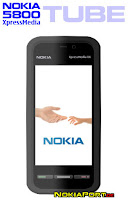 Lastly, the Nokia 5800 Xpress has bluetooth, a 3.2.mp camera and an improved sound surround included. It operates on a new Symbian platform which is supposed to be more user-friendly. Its Nokia Music program should be a response to the HTC G1 phone and to the iPhone. It is priced at about 400$. On the three dimensions, I would position it low on technology, medium on price and medium on the fun dimension.
To conclude:
- Apple has succeeded to maintain its strategic position despite its diversification strategy in the mobile phone sector. Apple stands for innovation, user-friendliness and fun at a premium price.
- LG keeps its position as a producer of handsets with rich media characteristics at a medium price.
- T-Mobile G1 aims to directly compete with the iPhone, although it lacks some of the "sexy touches" that the iPhone has. This strategic positioning is confirmed also on price dimension.
- Nokia - maintains its position as a mainstream phone producer, whose phones are characterized by reliability and viability. Price-wise, it is premium priced as compared to normal phones, but a little under-priced when compared to smart phones.
All in all, Nokia seems to be safe for know as it has a high brand recognition, high customer fidelity and a good distribution network. However, Apple's decision to lower iPhone's price makes me wonder where it wants to position itself in the long run. Provided that it keeps the same prices and widens its distribution network to include other network carriers than AT&T and Orange, it could become Nokia's direct competitor on the smart-phone segment.
Finally, let's not forget about Research inMotion, who produce the BlackBerries. For the moment, they are safe as they are on a niche segment, directly targeting big corporations. However safe they might feel because of their existing customer base and close contact with their buyers, they should take into consideration to upgrade their technology. Otherwise, the G1 and its next versions might become a threat.
- 2008, July, the 9th.: the new LG Secret (LG-KF750) touch-screen phone is launched
- 2008, July, the 11th.: new iPhone 3G is revealed by Steve Jobs
- 2008, September, the 23rd. : T-Mobile G1 (Google phone with the Android OS) is released
- 2008, October 2nd.: Nokia 5800Xpress (Tube) came up on the market
Nokia finally released yesterday its first touch-screen mobile phone, at a two years' distance from the pioneer Apple. This has been one of the last novelties for this year coming from the leading mobile phone producers.
The purpose of this post is not to explain you the technical capabilities of these smart-phones, neither to compare them on a point by point basis. What I want to do is to make you aware of the changes in the strategic positioning of these companies.
I will try to position the four mobile handset producers on three dimensions:
1) technological novelty
2) price (comparison on the price on www.electromaticinc.net)
3) fun dimension
So let's take them in chronological order.
<
 The LG secret is the latest LG mobile phone with a touch-screen, which brings with it a 5mp integated camera. However, it doesn't have WiFi. The price is 400$ without a contract. Analyzed on the three dimensions, it is positioned high in the fun dimension and medium priced, with medium level of novelty.
 The second generation of iPhone, the 3G brings with it a new, smoother design, and is technologically more advanced than the previous iPhone version. It includes: 3G technology, GPS, Wifi and a 2mp camera. It is being advertised as a "gorgeous phone" (Steve Jobs). If we place it on the three dimensions, it is high on all dimensions.
 The T-Mobile G1 costs about 500$ without a contract, has WiFi, GPS and TV-out and a 5mp camera included. Plus, it works on the new Android operating platform. However, design-wise it is not so "sexy", nor as fun as the iPhone. The advantage is that it allows music download from all Internet platforms, unlike the iPhone who supports only the iTunes. Thus, we position it high on the technological dimension, high on price.
  Lastly, the Nokia 5800 Xpress has bluetooth, a 3.2.mp camera and an improved sound surround included. It operates on a new Symbian platform which is supposed to be more user-friendly. Its Nokia Music program should be a response to the HTC G1 phone and to the iPhone. It is priced at about 400$. On the three dimensions, I would position it low on technology, medium on price and medium on the fun dimension.
 To conclude:
- Apple has succeeded to maintain its strategic position despite its diversification strategy in the mobile phone sector. Apple stands for innovation, user-friendliness and fun at a premium price.
- LG keeps its position as a producer of handsets with rich media characteristics at a medium price.
- T-Mobile G1 aims to directly compete with the iPhone, although it lacks some of the "sexy touches" that the iPhone has. This strategic positioning is confirmed also on price dimension.
- Nokia - maintains its position as a mainstream phone producer, whose phones are characterized by reliability and viability. Price-wise, it is premium priced as compared to normal phones, but a little under-priced when compared to smart phones.
All in all, Nokia seems to be safe for know as it has a high brand recognition, high customer fidelity and a good distribution network. However, Apple's decision to lower iPhone's price makes me wonder where it wants to position itself in the long run. Provided that it keeps the same prices and widens its distribution network to include other network carriers than AT&T and Orange, it could become Nokia's direct competitor on the smart-phone segment.
Finally, let's not forget about Research inMotion, who produce the BlackBerries. For the moment, they are safe as they are on a niche segment, directly targeting big corporations. However safe they might feel because of their existing customer base and close contact with their buyers, they should take into consideration to upgrade their technology. Otherwise, the G1 and its next versions might become a threat.
Tuesday, September 30, 2008
Financial crisis seriously affecting Europe

Looking back in the last six months at the evolution of the investment banking sector, and particularly the leader banks, we come up with the series: 5-4-2-0. Although I acknowledge that the transformation of Goldman Sachs and J.P. Morgan in banks under FED supervision is only a strategic move in order to be able to raise the finances they need easier than before, it's still a shock when I think "the pride of Wall Street is practically inexistent now". That is because to me Wall Street stands for "high-risk, high gain". However, the Wall Street Primadonas will have to limit their gains to moderate sums if they don't wanna risk being trapped in another "bankruptcy snowball".
And now, it's not only US that's in trouble...Europe comes along. It was actually high time for the crisis to reverse on our shores. Otherwise, it would have been atypical to everything that I have studied at the university. We look at the UK, known for its "no involvement policy", who nationalizes 2 banks in less than a year. We go more East, and find Hypo Real Estate Bank from Germany seeking governmental loan and Fortis, who's playing tennis with its ABN AMRO branches bought only last year.
From the Fortis and Wachovia's stories, I conclude that when you're in trouble, raising the needed finance is the sole purpose. What else can I understand from the fact that Fortis is thinking about selling ABN AMRO branches just one year after having acquired them? And now all I know about M&A seems to be contradicted by reality. Scared of bankruptcy, banks don't think about organizational issues, PMI costs, nor about their employee morale anymore. Quick money raise is their sole religion. However, the impact of all those M&A will show up on medium term, after the crisis is over, on the profitability of the involved banks. As a consequence, the current liquidity and solvency issues will be replaced by profitability issues.
But in the end, who is thinking about what saving money for the future if now you're starving?
Sunday, September 21, 2008
Global champions
The Economist has published today a series of interesting reports about the emerging markets, BRIC countries or how you want to name them. This terminology mainly refers to the countries from South East Asia, as well as China, Brazil, India, Russia as they constitute the v. important markets for both companies from developed and developing countries.

From the topics discussed in this special report, three have drawn my attention:
1) Debate over whether the term "emerging markets" is still relevant
2) The new global champions from emerging markets
3) The opportunities and threats of emerging markets
Concerning the first topic, I've found out how the term "emerging markets" came about. It was Antoine van Agtmael, an equity fund manager, who in 1981 preferred to use this term instead of "third world countries" in order to make investing in such countries more appealing. Nowadays, the SE Asian countries have moved into the "developed countries" league. Furthermore, under "emerging markets" we understand countries which have a high economic growth. However, we somehow neglect the associated risks with this accelerated economic growth. For these reasons, it is argued that the term "emerging markets" isn't appropriate.
Let's get down to business and discuss about the new global champions. While until 15 years ago, the MNC (multinational companies) from developed countries were dominating the global economy, in the recent years MNC from emerging markets have begun to play an increasing role.
How come are they so competitive?
Among their core capabilities I could mention: know-how about the political, way of doing business in the emerging markets, and closeness to the targeted clients from emerging countries, law raw material and labour costs in comparison to their MNC counterparts from developed countries. I am now thinking of: the Indian Tata Group, Infosys and Ranbaxy, Chinese Lenovo and Haier, Brazilian Embraer or the Mexican Cemex.
Do incumbents see them as a threat and do they have reasons for this?
Certainly they are seen as a threat not only for the market shares in the emerging countries, but also for the developed markets. The MNC from emerging markets represent a threat, not so much in the present, but for the future. That is because even though now they are positioned in the lower part of the value chain and they serve mainly low-end customers, they use their acquired revenues to pursue R&D and move up in the value-chain. A relevant example is Ranbaxy, an Indian pharmaceutical company, which used to produce only generics and has now become an R&D driven company which comes up with new drugs.
Nevertheless, and now we're moving to the third topic, the more the emerging countries are developing, the higher the labour costs will be and the MNC from emerging countries will have to develop other competencies in order to be able to compete with the incumbents from developed countries. The MNC from developed countries still have an advance over the EM MNC in the managerial capacity, as most of the senior managers are still American and there are few professionals from emerging countries who have the necessary managerial capabilities to run a MNC.
Finally, even though there are hundred things left to be said, I would conclude by inviting you to follow closely this interesting development in the business world so that you know which companies could be an attractive place to work and which are on the brink of falling down.

From the topics discussed in this special report, three have drawn my attention:
1) Debate over whether the term "emerging markets" is still relevant
2) The new global champions from emerging markets
3) The opportunities and threats of emerging markets
Concerning the first topic, I've found out how the term "emerging markets" came about. It was Antoine van Agtmael, an equity fund manager, who in 1981 preferred to use this term instead of "third world countries" in order to make investing in such countries more appealing. Nowadays, the SE Asian countries have moved into the "developed countries" league. Furthermore, under "emerging markets" we understand countries which have a high economic growth. However, we somehow neglect the associated risks with this accelerated economic growth. For these reasons, it is argued that the term "emerging markets" isn't appropriate.
Let's get down to business and discuss about the new global champions. While until 15 years ago, the MNC (multinational companies) from developed countries were dominating the global economy, in the recent years MNC from emerging markets have begun to play an increasing role.
How come are they so competitive?
Among their core capabilities I could mention: know-how about the political, way of doing business in the emerging markets, and closeness to the targeted clients from emerging countries, law raw material and labour costs in comparison to their MNC counterparts from developed countries. I am now thinking of: the Indian Tata Group, Infosys and Ranbaxy, Chinese Lenovo and Haier, Brazilian Embraer or the Mexican Cemex.
Do incumbents see them as a threat and do they have reasons for this?
Certainly they are seen as a threat not only for the market shares in the emerging countries, but also for the developed markets. The MNC from emerging markets represent a threat, not so much in the present, but for the future. That is because even though now they are positioned in the lower part of the value chain and they serve mainly low-end customers, they use their acquired revenues to pursue R&D and move up in the value-chain. A relevant example is Ranbaxy, an Indian pharmaceutical company, which used to produce only generics and has now become an R&D driven company which comes up with new drugs.
Nevertheless, and now we're moving to the third topic, the more the emerging countries are developing, the higher the labour costs will be and the MNC from emerging countries will have to develop other competencies in order to be able to compete with the incumbents from developed countries. The MNC from developed countries still have an advance over the EM MNC in the managerial capacity, as most of the senior managers are still American and there are few professionals from emerging countries who have the necessary managerial capabilities to run a MNC.
Finally, even though there are hundred things left to be said, I would conclude by inviting you to follow closely this interesting development in the business world so that you know which companies could be an attractive place to work and which are on the brink of falling down.
Thursday, September 18, 2008
Let's go shopping

Let's engage in a game that we used to play a few years behind....
...imagine that you have inherited $1 bio. and you have to invest them today. What can we buy with it?
1) 7% of JPMorgan Chase at the today's stock price
2) 25% of Washington Mutual Inc (the second largest mortgage lender in the US)
3) 3% of Merril Lynch & Co
......
If we look at the percentages, that's really not bad at all. Financial institutions are incredible "cheap" these days if you have cash.
We are witnessing very turbulent times, especially on the stock market. Companies that we have for long considered models of capitalism have filled for bankruptcy. Others are still fighting to stay alive, although they are in a coma (AIG).
But most interesting to observe is the consolidation that takes place in the economy. In the financial sector to name just a few: Merrill Lynch & Co by Bank of America in the US, HBOS (Britain biggest mortgage lender) by Lloyds TSB (commercial bank) in Europe, Washington Mutual is for sale, Reserve Primary (value of net assets of under $1).
Why is this consolidation happening? I will stop to mention just three reasons for that:
1) Liquidity and insolvency issues - with an observation, though: this is valid only for the financial industry.
2) When interest rates are low, investing in equities is more interesting.
3) General diversification reasons - decreasing risk of your own business ("don't put you're eggs in one basket"); economic, operational, financial and managerial synergies.
All in all, we are living interesting times and it's worth keeping an eye on what will happen.
Wednesday, September 17, 2008
A new hit: AIG rescued by the Fed

On Tuesday Fed announced an $85 billion Federal Reserve loan to insurance giant AIG. The explanation: AIG was deemed too huge (its assets top $1 trillion), too global and too interconnected to fail. (Times, 16th. Sept. 2008)
Especially AIG Financial Services Division is concerned is deeply involved in the derivatives market related to housing and credit, having an astonishing $441 billion exposure only on the credit default swap market. The reason for the bailout seems to be that nobody has the faintest idea what the consequences of AIG's failure for financial markets would be, but the fear was that it could lead to total chaos. As a consequence, Fed paid a loan to AIG in order to counteract this so-called "systemic risk".
However, the terms of the loan are unclear and thus difficult to understand. According to the deal, "AIG agrees to repay the loan with asset sales and give the government (and thus taxpayers) a 79.9% equity stake in the company" ????
Furthermore, AIG would have apparently survived only one or two days more without Fed's help as they not only had lots of write-downs ($25 billion in the first half of the year), but the recent rating downgrade by Moody's and S&P forced AIG to owe an additional of $13 billion collateral to the buyers of the swaps.
So, what do you believe will happen to AIG? It might be broken up in businesses and sold in pieces. Those aware of the "conglomerate discount" notion know that this would be a valid option for a multi-business company, especially when confronted to liquidity problems.
In conclusion, what else can be said? The financial world is so unpredictable and interconnected that nobody (including the Fed) does not want to take the risk of testing the consequences of a "domino effect".
Monday, September 15, 2008
Big disruptions in the banking sector
Dear friends,
The newspapers woke us up today with unbelievable news I would say. Headlines such as: "Lehman Brothers, bankrupt", "Merrill Lynch sold", or "AIG facing liquidity crisis" are to be read in all papers.
We all ask ourselves:
1) How could that happen? How could 3 of the 5 investment bank stars on Wall Street end this way?
An academic answer can be found in the "Black Swan" book, which explains us about the difficulty of predicting big disruptions. What is even more questionable is the reliability of the ratings given by the famous rating agencies such as: Fitch and Standard & Poor's. If Fitch downgraded Lehman Brothers' rating only AFTER they filled for bankruptcy, how will we trust the ratings given to other companies?
2) Why didn't the Fed save Merrill Lynch like they did in the case of Bear Stearns?
Had they inject money to save it, it would have created another precedent on the market and worse, other players would have counted on Fed's help for the case of emergency. The so-called "moral hazard" would have been activated in the minds of the other market players.
However, the Fed did do something, namely, for the first time in 95 years they allow equities to be used as a collateral. This is another sign which highlights that the current situation is a big disruption.
3) What will happen to European banks?
After all that happened in the US, I expect European bank market to show more signs of weakness in the next weeks. It seems as if in Europe everything happens with a delay of several weeks.
4) Should we pursue a career in banking?
For the banking and finance graduates, as well as for the other talents who had to leave these "investment bank stars", this period of time is a very difficult one. The question is: where would you be safe? Definitely, no bank in the world can offer you workplace safety now. Still, if you're only looking for a secure job, you can always apply to the Kantonalbanks in Switzerland. You won't find there the same job activity excitement, but is a workplace if you're in trouble.
The newspapers woke us up today with unbelievable news I would say. Headlines such as: "Lehman Brothers, bankrupt", "Merrill Lynch sold", or "AIG facing liquidity crisis" are to be read in all papers.
We all ask ourselves:
1) How could that happen? How could 3 of the 5 investment bank stars on Wall Street end this way?
An academic answer can be found in the "Black Swan" book, which explains us about the difficulty of predicting big disruptions. What is even more questionable is the reliability of the ratings given by the famous rating agencies such as: Fitch and Standard & Poor's. If Fitch downgraded Lehman Brothers' rating only AFTER they filled for bankruptcy, how will we trust the ratings given to other companies?
2) Why didn't the Fed save Merrill Lynch like they did in the case of Bear Stearns?
Had they inject money to save it, it would have created another precedent on the market and worse, other players would have counted on Fed's help for the case of emergency. The so-called "moral hazard" would have been activated in the minds of the other market players.
However, the Fed did do something, namely, for the first time in 95 years they allow equities to be used as a collateral. This is another sign which highlights that the current situation is a big disruption.
3) What will happen to European banks?
After all that happened in the US, I expect European bank market to show more signs of weakness in the next weeks. It seems as if in Europe everything happens with a delay of several weeks.
4) Should we pursue a career in banking?
For the banking and finance graduates, as well as for the other talents who had to leave these "investment bank stars", this period of time is a very difficult one. The question is: where would you be safe? Definitely, no bank in the world can offer you workplace safety now. Still, if you're only looking for a secure job, you can always apply to the Kantonalbanks in Switzerland. You won't find there the same job activity excitement, but is a workplace if you're in trouble.
Saturday, March 22, 2008
World Water Crisis
A picture is worth more than a thousand words.
Be aware of the world around you:
- have a rational consumption of water
- help people who lack their basic needs
- respect the nature and thus respect the lives of your peers


Be aware of the world around you:
- have a rational consumption of water
- help people who lack their basic needs
- respect the nature and thus respect the lives of your peers
Subscribe to:
Posts (Atom)
Follow my blog


 Posts
All Comments
Posts
All Comments


